

Among the many linguistic puzzles in The Lord of the Rings, one of the most intriguing concerns a seemingly minor statement by Aragorn. While discussing the Dark Lord, Aragorn tells the hobbits:
“Sauron is not his right name… He does not use it, nor permit it to be spelt or spoken.”
At first glance, the statement appears straightforward. “Sauron” is an enemy-given name rather than the Dark Lord’s own preferred designation. Yet a closer reading of Tolkien’s texts reveals an apparent contradiction. On several occasions, Sauron’s own servants seem perfectly willing to use the name “Sauron” in formal speech. Most notably, the Mouth of Sauron identifies himself using that very name, while the envoy sent to King Dáin speaks of “Sauron the Great.”
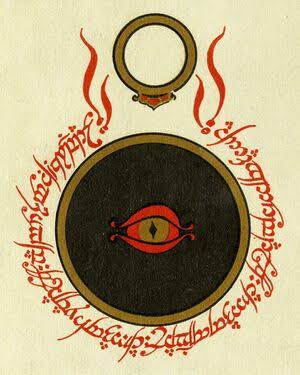
How can these passages be reconciled? Did Tolkien simply contradict himself? Was Aragorn mistaken? Or is there another explanation hidden within Tolkien’s broader philosophy of translation and language?
This essay examines the evidence from Tolkien’s texts and explores several possible resolutions. While no definitive answer exists, the evidence suggests that the contradiction may be more apparent than real.
“Sauron” Was Never His Chosen Name
The first point is relatively uncontroversial.
Tolkien consistently treats “Sauron” as a hostile epithet rather than the Maia’s original name. Before his corruption, he was known as Mairon, a name generally interpreted as meaning “the Admirable.” The Sindarin name Sauron instead conveys something closer to “the Abhorred” or “the Foul One.” Like “Morgoth” before him, the name became so universally accepted among his enemies that it effectively replaced his original identity.
Aragorn’s statement reinforces this understanding. He does not merely say that “Sauron” is the wrong name. Rather, he explains that the Dark Lord neither uses it himself nor permits others to speak or write it.
This is an extraordinarily strong claim.
If taken literally, it implies that no loyal servant would ever refer to his master as “Sauron.” The prohibition is not simply personal preference; it is presented as a matter of policy within Mordor itself.
This raises an obvious question: if Sauron rejected the name, what did he call himself?
The Missing Personal Name
Curiously, Tolkien never tells us.
Unlike Morgoth, whose preferred self-designation appears to have remained Melkor among his own followers for much of the First Age, Sauron never introduces himself under a personal name after his fall.
Instead, he consistently adopts titles.
During the Second Age he appears as Annatar, “Lord of Gifts,” while deceiving the Elves. After forging the One Ring he proclaims himself “King of Kings and Lord of the World.” Elsewhere he is styled “Lord of the Earth,” “the Lord of the Rings,” and simply “the Lord.”
None of these, however, functions as an ordinary personal name.
The closest candidate is the late form Tar-Mairon, preserved in Tolkien’s linguistic writings. This royal title incorporates his original name, suggesting that Sauron may have continued to identify himself with Mairon while adding the royal prefix Tar- (“King” or “High”). Because this form appears only in Tolkien’s later notes rather than in the published narratives, however, its precise role remains uncertain.
Nevertheless, Aragorn’s statement makes one thing difficult to escape: if “Sauron” was forbidden, some alternative almost certainly existed.
The Apparent Contradictions
Two passages immediately present problems.
First, the messenger sent to Dáin speaks explicitly of “Sauron the Great.”
Second, at the Black Gate, the Mouth of Sauron declares:
“I am the Mouth of Sauron.”
If Aragorn is correct, both statements appear impossible.
The Mouth of Sauron is no casual servant. He is perhaps the highest-ranking mortal in Mordor, serving as the Dark Lord’s chief herald and diplomat. If anyone should know what name his master permits, it would be him.
Likewise, the envoy sent to Erebor is hardly an undisciplined Orc. He represents Sauron in formal diplomatic negotiations.
Taken literally, both passages seem to contradict Aragorn directly.
The Silence of the Orcs
Yet these two passages become more interesting when compared with the rest of the narrative.
The Orcs themselves almost never use the name “Sauron.”
When Shagrat and Gorbag converse, they repeatedly refer to:
- the Boss
- the Big Boss
- His Eye
- the Great Eye
They conspicuously avoid using “Sauron.”
The same pattern appears elsewhere among Mordor’s servants. The Nazgûl never address him by name. The captains of Mordor refer to “the Lord.” Even among ordinary Orcs, circumlocutions vastly outnumber explicit references.
This widespread avoidance actually supports Aragorn’s statement.
Rather than undermining his claim, the overwhelming majority of dialogue behaves exactly as one would expect if the Dark Lord’s personal designation were considered too exalted—or too dangerous—to utter casually.
The two apparent contradictions therefore become all the more conspicuous precisely because they are exceptions.
Was Aragorn Simply Mistaken?
One possible explanation is that Aragorn overstated the situation.
Perhaps “Sauron” was discouraged rather than absolutely forbidden. Perhaps foreign envoys employed the familiar name when speaking to outsiders because no one beyond Mordor would recognize the Dark Lord’s preferred title.
This interpretation has some merit.
Diplomatic communication often requires using names familiar to one’s audience. An ambassador sent to Dáin would gain little by referring to “Tar-Mairon” or some Black Speech title unknown to the Dwarves.
Likewise, the Mouth of Sauron is addressing representatives of the West rather than fellow servants.
Viewed in this light, both examples become practical accommodations to foreign listeners rather than violations of internal custom.
The weakness of this interpretation lies in Aragorn’s wording.
“He does not use it, nor permit it to be spelt or spoken” is far stronger than “he prefers another name.” Aragorn sounds as though he is describing a genuine prohibition rather than a matter of etiquette.
The Translation Hypothesis
A second explanation draws upon Tolkien’s own literary framework.
The Lord of the Rings is not presented as an original English composition. It is explicitly described as a translation of the Red Book of Westmarch.
Throughout the work, Tolkien repeatedly replaces original names with English equivalents.
The Hobbits are not actually speaking English.
The Shire is itself a translation of the Westron Sûza.
“Baggins” translates the original family name Labingi.
Even many personal and geographical names have been deliberately rendered into forms accessible to English readers.
This raises an intriguing possibility.
Perhaps the servants of Mordor never actually uttered the word “Sauron.”
Instead, Tolkien simply translated whatever name or title they used into the conventional form familiar to his readers.
Under this interpretation, when the Mouth of Sauron declares:
“I am the Mouth of Sauron.”
the underlying Westron or Black Speech text may have read something closer to:
“I am the Mouth of the Lord.”
or
“I am the Mouth of Tar-Mairon.”
or even another royal title entirely unknown to us.
Likewise, “Sauron the Great” may represent a translation rather than a literal quotation.
This explanation has considerable appeal because it harmonizes Aragorn’s statement with Tolkien’s broader translation methodology.
Would Tolkien Really Do This?
There is ample precedent.
Throughout his legendarium, Tolkien routinely privileges readability over literal transcription.
The English reader encounters “Shire” instead of Sûza, “Baggins” instead of Labingi, and countless other translated forms.
Indeed, Tolkien occasionally explains in his appendices that names appearing in English are not what characters literally spoke.
If this practice applies consistently, then translating Sauron’s preferred self-designation into the conventional “Sauron” would hardly be unusual.
It would simply be another example of Tolkien sacrificing linguistic precision in favor of narrative clarity.
Modern readers instinctively recognize “Sauron.” A mysterious untranslated title would require repeated explanation.
The Problem with Mairon
If the translation hypothesis is accepted, another question naturally follows.
What was the underlying name?
The obvious candidate is Mairon.
Its chief advantage is that Tolkien explicitly identifies it as Sauron’s original name. Furthermore, the later appearance of Tar-Mairon suggests that Sauron retained some association with that identity even after claiming kingship.
Yet there are reasons for caution.
The Mairon who served Aulë before his corruption is not quite the same being who forged the One Ring.
Sauron abandoned much of his former identity. It is entirely possible that he abandoned his original name as well.
Moreover, Tolkien never explicitly states that Sauron resumed calling himself Mairon after his fall.
Consequently, while Mairon—or Tar-Mairon—remains an attractive hypothesis, it cannot be established from the published texts.
A Literary Rather Than Historical Tension
Perhaps the most satisfying way to understand the problem is to recognize the difference between Tolkien’s fictional history and Tolkien’s narrative technique.
Within Middle-earth itself, Aragorn’s statement almost certainly reflects reality.
The Dark Lord would scarcely tolerate his followers addressing him by a hostile Sindarin insult coined by his enemies.
Within the translated text, however, Tolkien consistently employs the name familiar to his readers.
These two goals—historical realism and literary accessibility—occasionally pull in different directions.
Most of the time the tension remains invisible.
Here, it briefly surfaces.
The result is a small inconsistency that may owe less to Tolkien’s imagined history than to the practical realities of translating that history into readable English.
Conclusion
The question of what Sauron called himself remains unanswered.
Aragorn assures us that “Sauron” was not the Dark Lord’s proper name and that he forbade its use among his followers. Yet Tolkien never reveals the alternative.
Most of Sauron’s servants behave exactly as Aragorn’s statement predicts, relying instead upon titles such as “the Lord,” “the Great Eye,” or “the Boss.” Only two significant passages appear to depart from this pattern, and both occur in formal diplomatic contexts.
Whether these represent genuine inconsistencies, accommodations for foreign audiences, or examples of Tolkien’s broader translation conventions cannot be proved.
Among these possibilities, however, the translation hypothesis deserves serious consideration. It accounts for Aragorn’s explicit statement, fits Tolkien’s well-established practice of rendering names into familiar English forms, and explains why the overwhelming majority of Mordor’s servants avoid the name “Sauron” altogether.
As for the hidden original, Mairon—or perhaps Tar-Mairon—remains the strongest candidate, but only as an informed inference. Tolkien never places either name upon Sauron’s own lips.
Like so many linguistic mysteries in Middle-earth, the question ultimately reflects Tolkien’s extraordinary attention to language. Even a single sentence spoken by Aragorn opens a window into questions of translation, political authority, historical memory, and identity. The contradiction may never be fully resolved, but it reminds us that Tolkien’s world is not merely populated by characters—it is filtered through languages, manuscripts, translators, and traditions, each leaving subtle traces upon the text we read today.
© 2026 Christian A. Larsen. All Rights Reserved.
If you enjoyed this piece, you may find more to your liking in the catacombs.


Leave a Reply