

Note: This account is not drawn from the writings of J.R.R. Tolkien and is not part of the established legendarium. It is a work of speculation, imagining how the rise and fall of Mordor might have appeared from the perspective of one of its own servants. While it seeks to remain faithful to Tolkien’s style, themes, and historical framework, the character, events, and interpretations presented here are entirely hypothetical.
Nardû Azrazâin (Adûnaic: “soldier sea-lands”) (Third Age 2965 – Fourth Age 33) was a captain of the Corsairs of Umbar in the last years of the Third Age, among the most feared mariners to serve Sauron in the years of the War of the Ring. From Umbar and the havens of Harad he commanded black fleets that harried the coasts and sea-roads of Gondor, bringing fire, slavery, and fear to Belfalas and the southern fiefs. Though he was known for discipline and cunning, he was remembered most of all for his unwavering loyalty to the Shadow and the severity of his war against the Dúnedain of the West.
Early Life
Azrazâin was born in Umbar in the year 2965 of the Third Age, of the line of the King’s Men who had dwelt there since the days after the Downfall of Númenor. His father served as a shipwright in the employ of the Corsair lords, and from childhood Azrazâin learned the craft of ships, tides, and winds. Yet even in youth he was marked by sternness and a lack of mercy.
In Umbar the pride of Númenor endured in corrupted form. The memory of Ar-Pharazôn and the coming of the Exiles still shaped the thought of the Black Númenóreans, and among them the Eldar were held in scorn as deceivers who had weakened the race of Men. Azrazâin embraced these teachings fully, and in later years he spoke openly against both Elves and the heirs of Elendil, claiming that only strength gave rightful rule.
As a young man he went to sea in the service of Corsair captains, ranging from Near Harad to distant southern waters. In raids upon Gondor’s coasts he earned a name for patience and sudden, precise assault. Unlike many who sought glory in open battle, Azrazâin preferred secrecy, shadowed landfalls, and swift ruin delivered without warning.
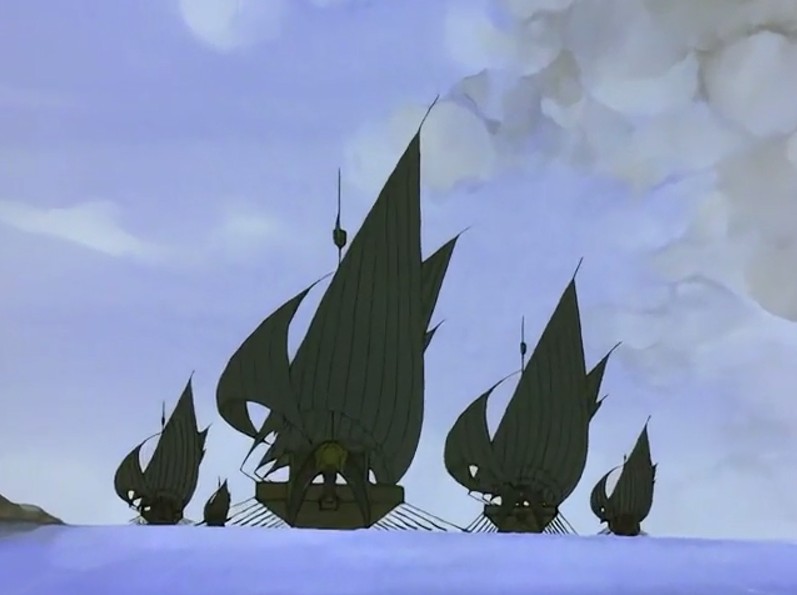
In time he became master of a great black-hulled dromond, swift under sail and oar alike, and from that command his rise among the Corsairs was rapid.
Service to the Shadow
In the later Third Age, as Mordor’s power grew again, many lords of Umbar entered into alliance with Sauron. Azrazâin was counted among the most faithful of these. Emissaries from Minas Morgul and Barad-dûr brought gifts and dark counsel, and from their teachings there arose among the Corsairs a cruel creed later named Morgulastar (Sindarin: “Morgul-faith” or literally, “faith of black sorcery”), which exalted fear and domination, rejected mercy, and fostered hatred toward the Elves, Dwarves, Dúnedain, and all other Free Peoples.
Azrazâin adhered wholly to this doctrine. He believed the West to be in decline and that under Sauron a new dominion of Men would rise. His service was not born merely of fear, but of conviction; he held the Dark Lord to be the greatest power remaining in Middle-earth. Toward the Eldar his hatred remained constant, and toward Gondor his malice deepened with every campaign.
Rise Among the Corsairs
By the opening of the War of the Ring, Azrazâin had become one of the chief captains of Umbar. Under his command sailed many vessels—great dromonds and swift oared ships—and his fleets struck repeatedly along the coasts of Gondor.
He rarely engaged the naval strength of the West directly. Instead he broke his forces into smaller companies, striking by stealth along coasts and islands, guided by hidden signals and night beacons. Fisherfolk of Belfalas long spoke of black sails appearing without warning and of oars beating through darkness before flame consumed their havens.
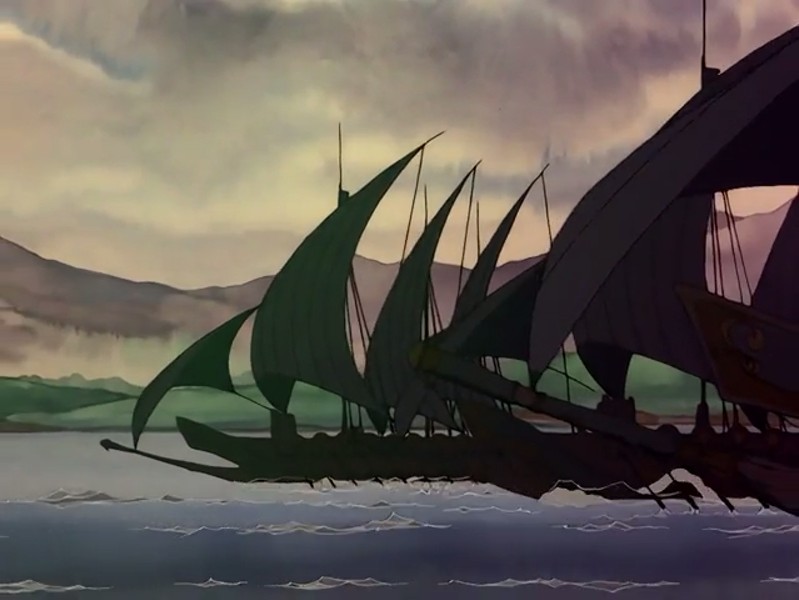
Under his command, trade was disrupted, villages burned, and captives carried south into slavery. Yet even Gondor’s strength at sea could not fully prevent his raids, and fear spread far beyond the scale of his numbers, for Azrazâin held terror itself to be a weapon.
War of the Ring and Defeat
When open war came in the year 3018 of the Third Age, Azrazâin led much of the Corsair strength from Umbar and Harad. Yet the tide turned when the forces of the West strengthened their coasts, and Aragorn son of Arathorn came by the Paths of the Dead with the Grey Company and the Dead Men of Dunharrow.
At the Battle of Pelargir the Corsair fleet was utterly broken. Many ships were captured or destroyed, and Azrazâin escaped only with a remnant of his forces, fleeing south under cover of night. Thereafter the power of Umbar upon the northern seas was shattered.
After the Fall of Sauron
When Barad-dûr fell and Sauron was utterly destroyed, confusion spread through all lands that had served him. Some Easterlings and Haradrim fled east beyond reckoning, while others broke allegiance and sought only survival.
Azrazâin returned in haste to Umbar. For a time he strove to preserve order among the Corsair lords and maintain what remained of their fleets. Yet rebellion spread quickly: slaves rose against masters in certain quarters, captains turned upon one another, and former servants of Mordor sought only to preserve their own power.
Even so, Azrazâin did not immediately abandon hope. A council of surviving captains and governors was formed in Umbar under his authority, and for a brief moment it was believed that the former dominion might be preserved in diminished form. Yet it was already hollow: no tidings of obedience came from East or South, only further collapse.
Dissolution of the Council
As Mordor’s structure fully disintegrated, the council’s authority shrank to Umbar and a few coastal havens. Even there, captains withdrew allegiance one by one, and fleets sailed under divided banners or none at all.
When envoys of King Elessar arrived demanding submission and the laying down of all claims inherited from Sauron’s dominion, no unity remained to resist them. Azrazâin, perceiving the end of the council’s purpose, entered into parley and accepted surrender terms. Thus the council was dissolved, and with it the last organized remnant of the Shadow’s rule in the South came to its end.
Later Life
Azrazâin was taken in chains to Minas Tirith, where he was judged for his deeds. Many demanded his death for the burnings, enslavements, and long cruelty of the Corsair wars, yet King Elessar granted him life, though not freedom. He was condemned to long imprisonment in Harondor.
In captivity he showed little repentance. Though age and restraint diminished his strength, he remained stern and unyielding, speaking more often of ships and the lost dominion of Umbar than of his own fate.
After many years he was released an old man. He returned to Umbar, living quietly by the sea. There he composed accounts of his voyages and wars, though few copies survived into later days.
In Gondor his name remained accursed, especially in Belfalas, where memories of Corsair raids endured among mariners. Yet in Umbar some remembered him as the last great captain of the Black Fleets before the full dominion of the Reunited Kingdom.
Death
Azrazâin died in the thirty-third year of the Fourth Age. Few honors marked his passing, though old seafarers attended his burial by the shore. Thus ended Nardû Azrazâin, captain of Umbar: a man of skill and iron will, whose gifts were devoted wholly to the service of shadow and war, and whose name passed into the long memory of sorrow along the southern seas.
© 2026 Christian A. Larsen. All Rights Reserved.


Leave a Reply