

The early enthusiasm surrounding Christopher Nolan’s The Odyssey points to something easy to overlook in an era of cinematic universes and algorithmically optimized entertainment: audiences are still capable of being drawn toward stories that feel impossibly large. A filmmaker can still spend hundreds of millions of dollars adapting an ancient poem, filling the screen with gods, monsters, warriors, and journeys across unknown worlds, and the result can feel less like nostalgia than a rediscovery.
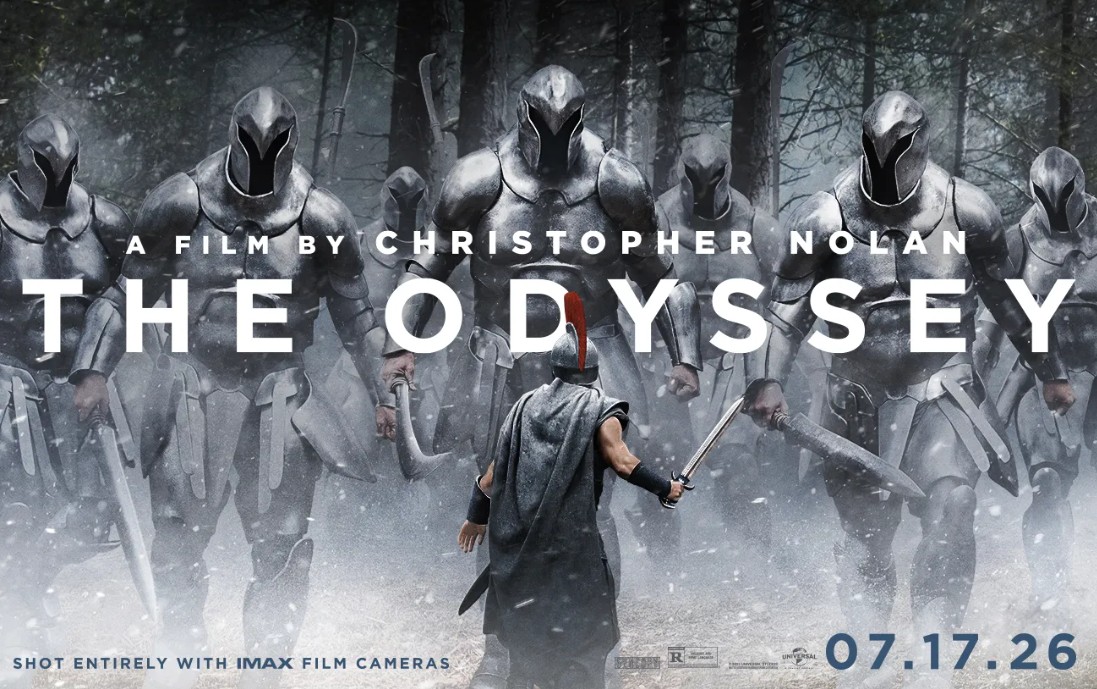
That possibility should encourage Hollywood to look beyond the familiar shelves of mythology. If Homer’s Odyssey can receive a modern, serious cinematic treatment, another foundational work of Western storytelling is waiting for its moment: Richard Wagner’s Der Ring des Nibelungen.
More specifically, the first half of Wagner’s cycle—Das Rheingold and Die Walküre—contains the blueprint for a film that could become one of the defining mythological epics of the modern era.
Its title would be The Valkyrie.
The obvious objection is that Wagner’s Ring Cycle is already famous, already monumental, already considered one of the supreme achievements of opera. But that is precisely why it has remained strangely inaccessible to cinema. Wagner’s work has often been treated as something to preserve rather than something to reinterpret. The challenge is not how to transfer the opera to film. The challenge is how to discover the film hidden inside the opera.
The answer would be not to make an opera at all.
The Valkyrie would use Wagner’s music as its foundation but tell its story through the language of cinema. The characters would not sing. The camera would do what the stage cannot. The orchestra would become an unseen narrator, carrying the memories, ambitions, and tragedies of a world collapsing under the weight of its own desires.
The story begins in a world before history, when the boundaries between gods, nature, and humanity have not yet hardened. Beneath the waters of the Rín lies a treasure whose power exceeds any kingdom: gold that can be transformed into a ring granting mastery over the world. Andvari, a dwarf who has discovered the price of power, renounces love and creates the object that will become the source of every future catastrophe.
The ring eventually falls into the hands of Óðinn, ruler of the gods.
Óðinn is not a simple tyrant. He is perhaps more interesting because he is not one. He is a builder, a strategist, a visionary who believes that the world can be shaped through intelligence and sacrifice. He constructs Valhǫll, a magnificent fortress meant to secure divine civilization against chaos. Yet every achievement comes with a cost. Every compromise he makes in the name of order brings him closer to the destruction he fears.
Wagner understood something that modern political dramas often circle around but rarely express: power does not merely corrupt people. It traps them. Those who seek control eventually become servants of the systems they created.
That makes Óðinn an unusually modern character. He belongs not only to mythology but to the long tradition of tragic leaders who believe they are making necessary choices while slowly destroying the things they claim to protect.
But The Valkyrie would not belong to Óðinn alone. Its true protagonist would be Brynhildr.
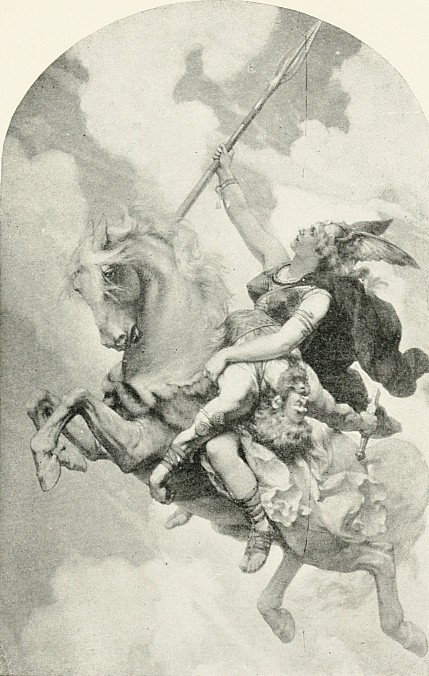
In popular imagination, a Valkyrie is often reduced to an image: armor, wings, a warrior descending from the heavens. Wagner’s Brynhildr is far more complicated. She is Óðinn’s daughter, his most loyal servant, and the person who ultimately sees the moral consequences of his decisions more clearly than he does himself.
Her rebellion is not born from ambition. It is born from empathy.
When she chooses to protect Sigmundr, a mortal hero whose fate Óðinn has already decided, she commits an act that threatens the entire order of the gods. She chooses human feeling over divine law. In doing so, she becomes the first person in the story to recognize that a world built entirely around power cannot survive.
This is where the film would find its emotional center: the relationship between a father and daughter who love each other but represent two incompatible visions of the future.
The story of Sigmundr and Siglindr would provide the human heart of the epic. Their encounter would feel almost startlingly intimate against the scale of the mythology surrounding them. While gods negotiate the fate of civilizations, two vulnerable people discover a connection that defies the rules imposed upon them.
Their love is dangerous because it represents something the gods cannot control.
For all its grandeur, the Ring Cycle is ultimately not a story about magic rings or supernatural kingdoms. It is a story about the limits of possession. The ring promises unlimited power, but every person who holds it loses something essential. The gods seek immortality and discover that they have made themselves incapable of change. The rulers of the world attempt to eliminate uncertainty and create the conditions for catastrophe.
The visual possibilities are almost overwhelming. The opening moments could depict the birth of the world itself: the Rín flowing through an untouched landscape, the creation of the ring, and the first glimpse of a civilization beginning its long descent. Valhǫll could appear not as a fantasy palace but as a monument to ambition—a breathtaking achievement built upon moral compromises that cannot be sustained.
The Valkyries would offer one of cinema’s great mythic images. The famous “Ride of the Valkyries” would not be a performance but an apparition: warriors moving through storm clouds above battlefields, carrying fallen heroes toward a future war that may already be lost. The sequence would transform a familiar piece of music into something unsettling—the sound of a civilization preparing for its own funeral.
And at the center of the film would be one of the most extraordinary scenes Wagner ever created: Óðinn’s farewell to Brynhildr.
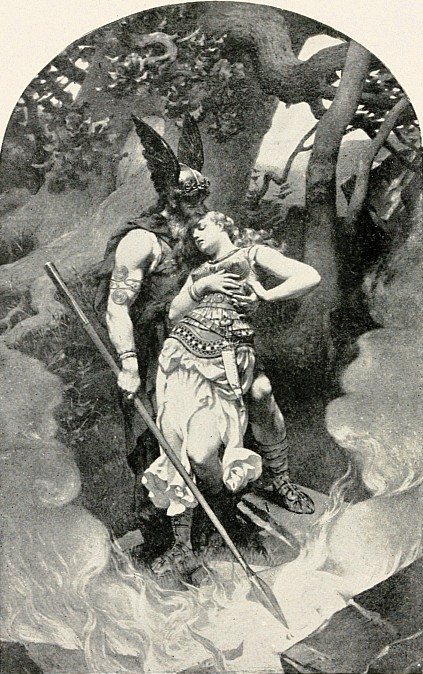
The god who has spent the entire story trying to master fate finally accepts that he cannot. He places his daughter into an enchanted sleep and surrounds her with a wall of fire, not as punishment but as protection. He is both abandoning her and saving her. He is both a ruler losing control and a father experiencing the most painful act of love.
Few moments in mythology capture the tragedy of parenthood so completely: the realization that protecting someone sometimes means allowing them to leave.
A film like The Valkyrie would arrive at a moment when audiences seem ready for stories that treat myth not as intellectual property but as a language for understanding human problems. The greatest myths endure because they are not really about gods or monsters. They are about ambition, grief, love, and the recurring human belief that the next conquest, the next invention, or the next victory will finally make us secure.
Wagner’s Ring suggests the opposite.
The desire to possess everything may be the thing that guarantees we lose it all.
If The Odyssey can remind modern audiences that ancient stories still have the power to astonish, then The Valkyrie offers the possibility of a different kind of epic: not a tale of a hero returning home, but a tragedy about a civilization realizing too late that it has built its own downfall.
The ring is not merely an artifact waiting to be discovered.
It is a warning that has been waiting to be heard.
© 2026 Christian A. Larsen. All Rights Reserved.
 Christian A. Larsen
Leave a comment