

In the deep roots of Indo-European religion, one of the most enduring and widespread motifs is that of the Divine Twins—a pair of brother gods often linked to horses, protection, healing, fertility, and the celestial sphere. Known under different names across cultures—such as the Dioscuri (Castor and Pollux) in Greco-Roman myth, the Aśvins in Vedic tradition, and Hengist and Horsa in Anglo-Saxon legend—the Divine Twins are among the clearest archetypes traceable back to Proto-Indo-European (PIE) religion.
Yet, curiously, Norse mythology—so richly preserved in the Poetic and Prose Eddas—does not present a clear pair of Divine Twins. Scholars have long puzzled over this absence, especially since other Germanic peoples, like the Naharvali mentioned by Tacitus, worshipped twin deities: the Alcis. So who were the Norse divine twins, if they existed? Were they forgotten, overwritten, or transformed into other figures?
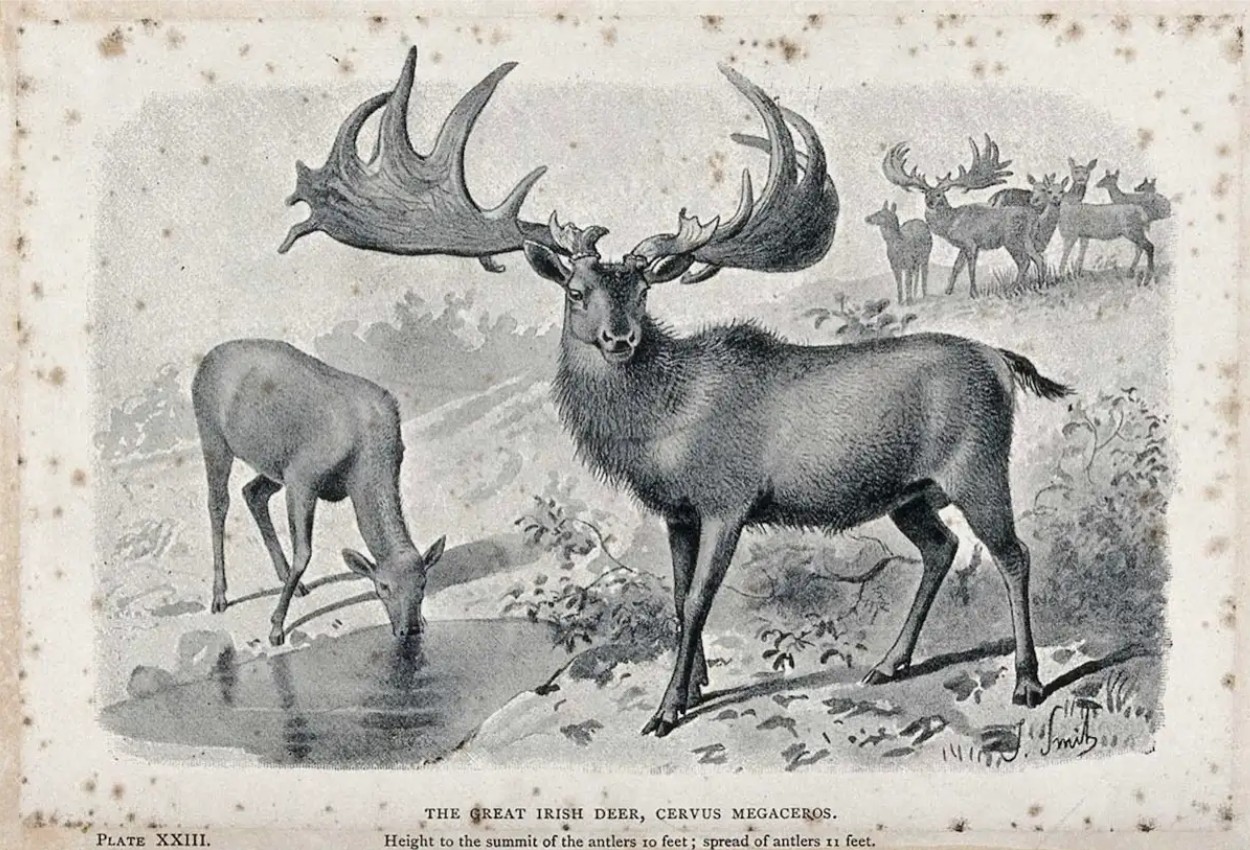
This post explores evidence for the Divine Twins in Norse myth, connects it to the wider Indo-European tradition, and ventures a speculative reconstruction of these lost Norse twin gods—elk-associated brothers here called the Elgarnir (“the Elk-ones”), imagined as Steggi (“Stag”) and Bukk (“Buck”), mirroring Hengist and Horsa (“Stallion” and “Horse”).
The Indo-European Divine Twins: An Enduring Archetype
Across Indo-European cultures, the Divine Twins share distinctive traits:
- Twinhood (naturally),
- Association with ungulates (hoofed animals),
- Protective and healing roles,
- Involvement in rescue myths,
- Astral symbolism, often linked to morning and evening stars,
- Roles as helpers or guardians of mankind in times of peril.
Examples include:
- The Greek Dioscuri (Castor and Pollux): Sailor rescuers who ride shining horses across the sky.
- The Vedic Aśvins: Twin horsemen and healers who rescue mortals and bring the light of dawn.
- The Baltic Dieva Dēli: Sons of the sky god Dievas, linked to sun and fertility rites.
Scholars like Georges Dumézil and Martin L. West argue that these figures descend from a common PIE archetype, often reconstructed as Manus and Yemos (“Man” and “Twin”), who served cosmological and ritual functions.
The Germanic Alcis: Twin Gods in the Forest
One of the clearest early Germanic references comes from Tacitus (1st century CE), who writes about the Naharvali, a central European Germanic tribe:
“A grove is held sacred by them; the presiding priest dresses as a woman, but the deities worshipped are twin gods called the Alcis. The Romans compare them to Castor and Pollux.”
— Germania 43
This passage is revealing:
- The Alcis are twin male deities,
- Worshipped in a sacred grove rather than temples, a strong link to old Indo-European nature worship,
- Their priest’s female attire suggests ritual inversion or fertility rites,
- The name Alcis likely connects to the PIE root h₁elḱ- (“elk” or “to protect”), linking these twins symbolically to the forest and animals.
This implies that the Divine Twins motif survived among early Germanic peoples, preserving both sacred groves and animal symbolism.
Hengist and Horsa: Anglo-Saxon Echoes
Moving forward to post-Roman Britain, we find Hengist and Horsa, legendary brothers who led the Anglo-Saxon migration to England. Their names mean “stallion” and “horse,” directly evoking the twin horsemen motif.
Though not worshipped as gods, they appear as mythic ancestors and culture-bringers, in the same mold as Romulus and Remus. Hengist and Horsa may reflect a later, humanized survival of the Indo-European Divine Twins, gradually demoted from divine to heroic status.
The Missing Norse Divine Twins
Norse mythology, with its rich pantheon, surprisingly lacks a clear Divine Twins pair with the functions of the Alcis or Dioscuri. Some sibling pairs exist:
- Freyr and Freyja: Fertility-focused Vanir twins of ambiguous twinhood,
- Baldr and Höðr: Opposed brothers of light and darkness, but not twins,
- Magni and Móði: Thor’s sons, with names meaning ‘mighty’ and ‘moody’.
None perfectly fit the Divine Twins archetype.
So, did the Norse once have Divine Twins who were forgotten, transformed, or absorbed?
Reconstructing the Lost Twins: The Elgarnir—Steggi and Bukk
Building on the elk imagery in the Alcis and the importance of forest animals in Norse culture, we can imagine a lost pair of elk-associated divine twins: the Elgarnir (“Elk-ones” in Old Norse).
These hypothetical twin gods might be:
- Steggi (“Stag” — adult male deer).
- Bukk (“Buck” — male deer or goat),
These elk-twins would resonate with Norse reverence for the forest, hunting, and animal spirits. They may have:
- Been twin male gods or spirits,
- Associated with elk, deer, and the forest,
- Served as patrons of hunters, herders, or warriors,
- Functioned as guides or protectors through wilderness and winter,
- Appeared during liminal times (dawn, dusk, solstices),
- Possibly shapeshifted into elk or rode elks as sacred mounts.
Such deities could have persisted in rural or forested areas, where animistic beliefs survived alongside or under the Æsir-Vanir pantheon.
Where Did the Elgarnir Fit? Aesir, Vanir, or Jotnar?
The Norse pantheon divides broadly into three groups: the Aesir, the Vanir, and the Jotnar (giants). Where might the Elgarnir belong?
The Aesir
- Gods of war, sovereignty, order (Odin, Thor, Tyr).
- The Elgarnir’s forest-animal, fertility, and liminal nature make them ill-fitting as Aesir.
- Possible minor Aesir spirits if assimilated later, but unlikely core members.
The Vanir
- Fertility, prosperity, nature gods (Freyr, Freyja, Njord).
- Freyr and Freyja as sibling Vanir twins may be a transformation of the Divine Twins archetype.
- The Elgarnir’s strong nature, fertility, and protective symbolism align best here.
- They might be Vanir forest spirits or older deities absorbed into the Vanir sphere.
The Jotnar
- Primordial giants linked to natural forces, often adversarial or neutral.
- Many represent wild nature and animals, but are rarely protective twin gods.
- The Elgarnir could have origins or connections here if conceived as wild forest spirits rather than cultic gods.
Conclusion on Placement: The Vanir are the most plausible pantheon for the Elgarnir—divine twins of nature, fertility, and protection—though some liminal Jotnar-like wildness could also feature in their character.
Ritual Echoes: Sacred Groves and Cross-Dressing Priests
Tacitus’ note of a priest dressing as a woman during Alcis worship points to ritual inversion or fertility rites—common in Indo-European cults. Could similar practices have existed in Norse or Germanic traditions?
Possibly, especially among shamanistic seiðr practitioners known for crossing gender boundaries and engaging with liminal forces. Forest-dwelling communities, or those influenced by Saami shamanism, might have preserved rites honoring elk spirits or twin protectors.
Echoes in the Trees: Remembering the Elk-Twins
Though Norse texts do not clearly preserve Divine Twins akin to those in other Indo-European traditions, the evidence of the Alcis, Hengist and Horsa, and the fertility-focused Vanir suggests such figures might have once existed.
If so, the Elgarnir—Steggi and Bukk, “The Elk-ones”—could have embodied protection, wild wisdom, and the threshold between civilization and nature.
In the silent northern forests of myth, perhaps the hooves of the elk-twins still echo—calling us to remember the forgotten gods who once walked alongside humanity, antlered, wild, and divine.
© 2026 Christian A. Larsen. All Rights Reserved.


Leave a Reply