

The Anglo-Saxon religious tradition, though fragmentary and often overshadowed by later Christian writings, offers tantalizing glimpses into a pre-Christian pantheon that parallels its more elaborately preserved Norse counterpart. Scholars broadly agree that the Anglo-Saxons revered a pantheon that included gods corresponding to Óðinn (Woden), Þórr (Þunor), Týr (Tīw), among others. However, the surviving Old English texts and archaeological records paint a far less complete picture than the rich Norse mythological tapestry emerging in Iceland centuries later.
What if the Anglo-Saxon gods followed a fuller, Norse-like path? What if their pantheon included analogues not only to the better-known Woden, Þunor, and Tīw but also to gods like Baldr (Bældæg), Frigg (Frīġ), Heimdallr (Homdeall), Bragi (Brego), Iðunn (Edun), Hǫðr (Heaþu), Njǫrðr (Neorþe), Freyr (Frea), Freyja (Frēo), and Loki (Locce)? By reconstructing such a pantheon, we can illuminate both linguistic and cultural dimensions of Anglo-Saxon religion, while exploring the deeper etymological roots of their divine names and titles.
The Core Pantheon: Parallels and Etymologies
Óðinn — Woden
The chief god of the Germanic pantheon, Óðinn in Old Norse, appears as Woden in Old English. The name Woden derives from Proto-Germanic Wōđanaz, which in turn is rooted in the adjective wōđaz, meaning “fury,” “madness,” or “inspiration.” This root is linguistically related to Old Norse óðr, denoting “poetry,” “ecstasy,” or “inspired frenzy.”
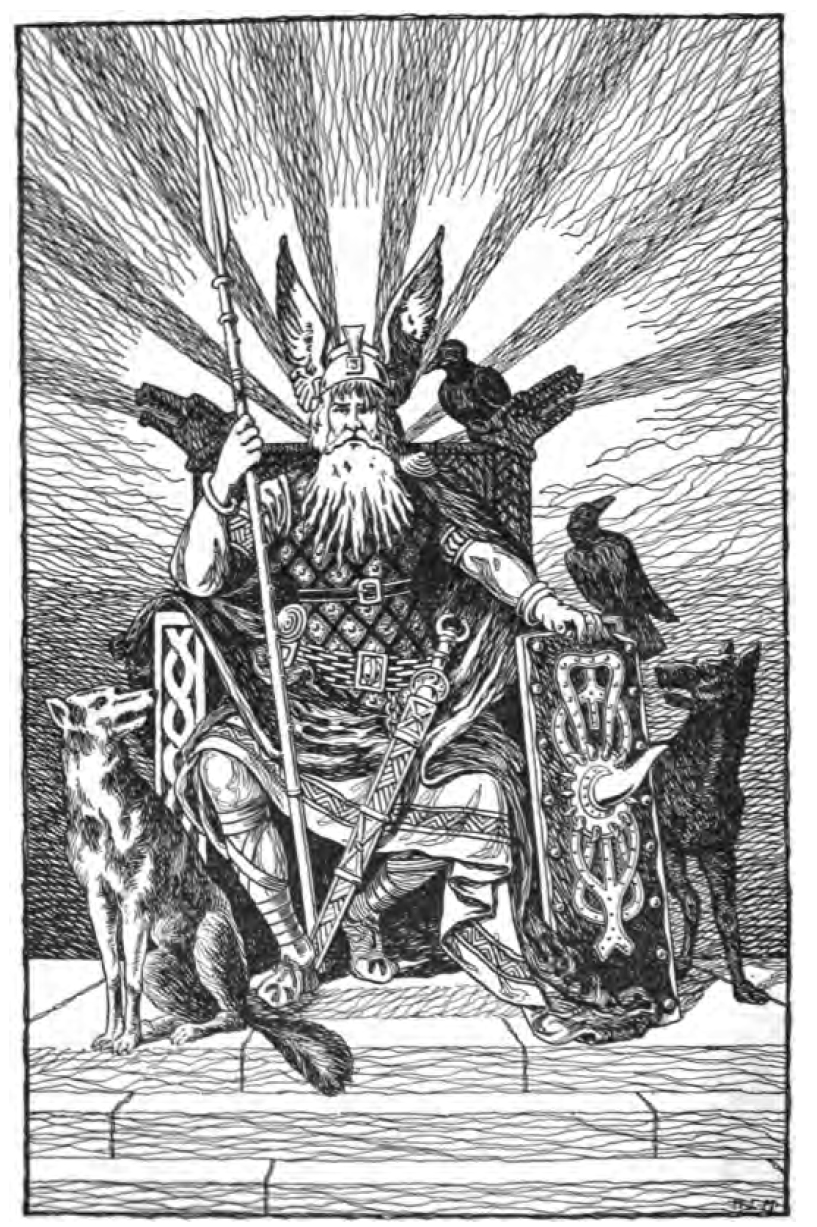
The Proto-Germanic root wōđ- reflects a liminal state of ecstatic insight and frenzied battle fury. Cognates include Gothic wods (“mad”), and related verbs in other Germanic languages connote rage or inspiration. This etymological connection reveals Woden as a god not only of war but also of poetic inspiration and shamanistic wisdom — a figure whose mythic traits include shape-shifting and the pursuit of knowledge at any cost.
Woden’s linguistic legacy survives in place names such as Wednesbury (“Woden’s fort”) and in the day name Wednesday (Old English Wōdnesdæg), a testament to his central cultural role.
Frigg — Frīġ
Frigg, Óðinn’s spouse in Norse mythology, is Frīġ in Old English, derived from Proto-Germanic Frijjō, meaning “beloved” or “free.” This root comes from the PIE prī- (“to love”), reflecting deep social and emotional bonds. The etymology parallels Old High German Frīja and Gothic Frīja (“love,” “friendship”), emphasizing a goddess associated with love, marriage, and household harmony.
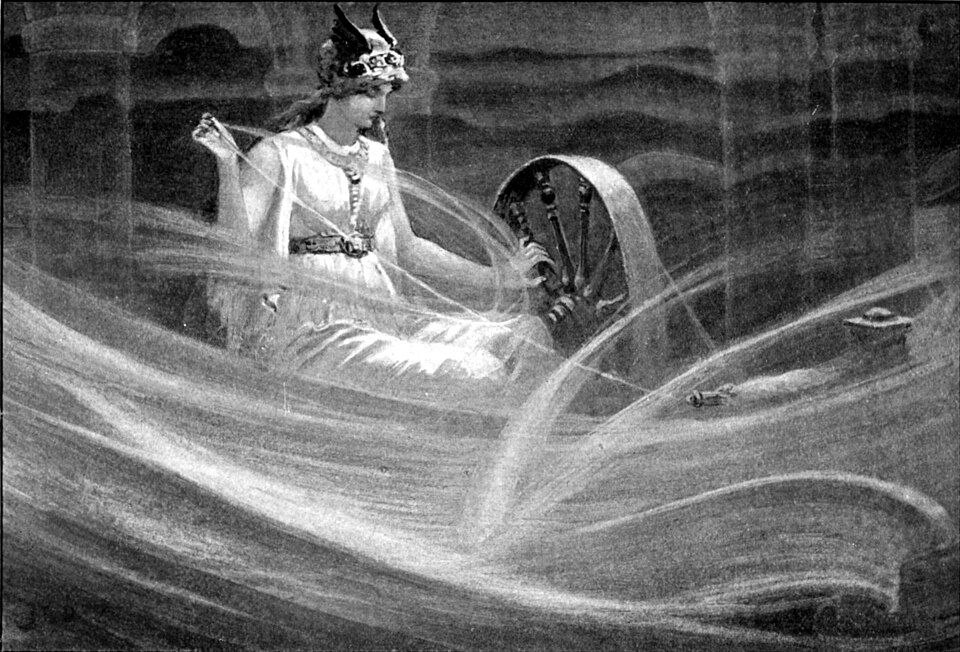
The Old English word frēo (“free,” “noble”) shares this root and underscores Frigg’s role as a figure of social bonds and contractual freedom. The connection between freedom and love in her name suggests she embodied sacred social orders and protective oaths, complementing the warlike and mystical nature of Woden.
Þórr — Þunor
Þórr, the thunder god of Norse myth, appears as Þunor in Old English. Both names derive from Proto-Germanic Þunraz, literally meaning “thunder.” This root is onomatopoeic, imitative of the rolling sound of thunder, and cognate with Latin tonare (“to thunder”) and Sanskrit tanv- (“to stretch,” related to the sky).
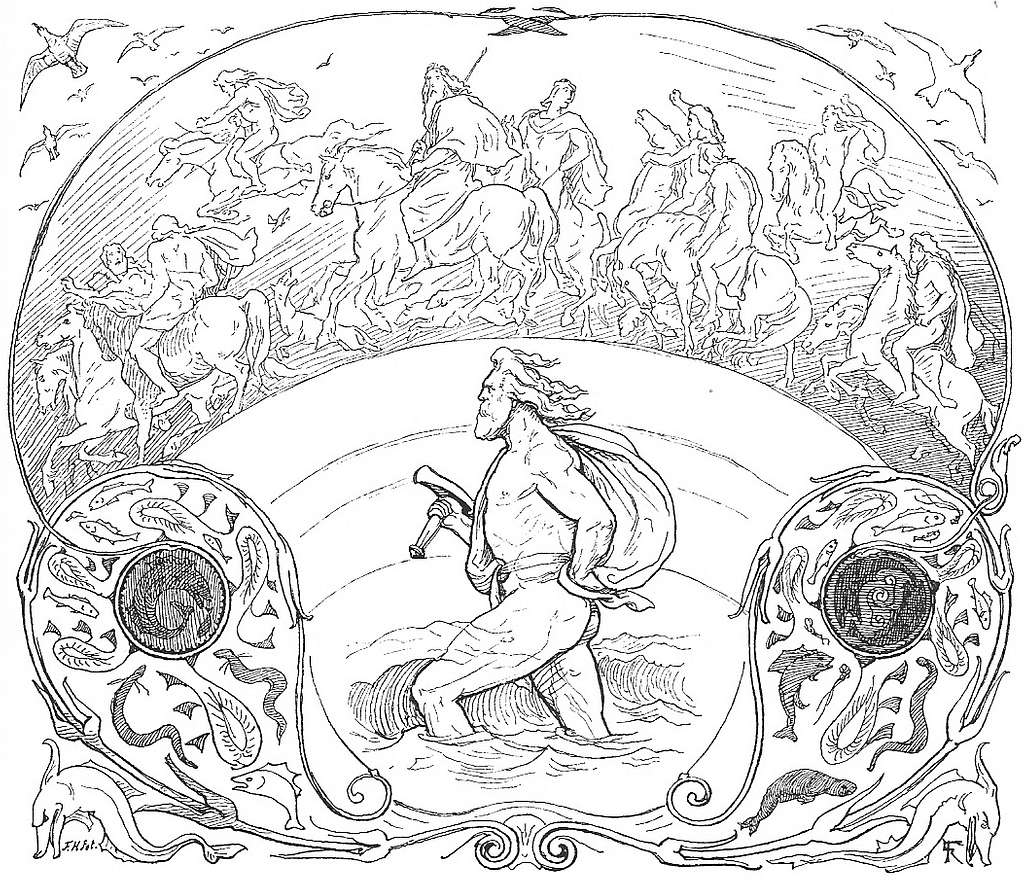
Þunor is a divine force of nature—thunder, storms, fertility, and protection. His hammer, Mjölnir, symbolizes destructive power turned toward safeguarding humanity from chaos and giants. The linguistic legacy of Þunor appears in place names like Thundersley (“Þunor’s clearing”) and the weekday Thursday (Þunresdæg).
Baldr — Bældæg
Baldr (Old Norse) becomes Bældæg in Old English, a compound name whose elements merit careful unpacking. The first element, bæl- (from Proto-Germanic balþaz), means “bold” or “brave,” cognate with Old Norse baldr (“prince” or “hero”). The second element, dæg, means “day.” Together, Bældæg can be interpreted as “bold day” or “shining day,” evoking brightness, nobility, and hope.
Baldr’s mythic death at the hands of the blind god Hǫðr is a potent symbol of loss and eventual cosmic renewal. The etymology emphasizes light and radiance, aligning Bældæg with themes of purity, hope, and the cycles of nature.
Týr — Tīw
Týr (Old Norse) and Tīw (Old English) derive from Proto-Germanic Tīwaz, whose origins trace back to the PIE root deiwo- meaning “god” or “celestial being.” This root is the ancestor of Latin deus and Sanskrit deva, highlighting the divine and shining nature of this deity. The root dyeu- (“to shine”) connotes heavenly brightness and order.
Tīw’s mythic narrative of sacrificing his hand to bind Fenrir reflects values of courage, honor, and lawful order. His enduring cultural significance is memorialized in the weekday Tuesday (Tīwesdæg), emphasizing his role as a martial and juridical figure.
Heimdallr — Homdeall
Heimdallr, the watchman of the gods, appears in Old English as Homdeall. The name is less certain but may be a compound of hom- (“home” or “village”) and deall, related to Old English dælan (“to divide, distribute, or look”). The element deall could derive from a root meaning “to observe” or “to watch.”
This etymology fits Heimdallr’s mythological role as guardian of boundaries, protector of the gods’ realm, and herald of the apocalypse. Homdeall would have been a divine sentinel figure, overseeing community safety and sacred borders.
Bragi — Brego
Bragi, god of poetry and eloquence, corresponds to Old English Brego, likely from Proto-Germanic braggō, connected to brag- meaning “poem” or “boast.” This root resonates with the Old English bragu, meaning “poetry” or “noble speech.”
Bragi’s linguistic roots emphasize the importance of poetic tradition and verbal artistry, framing him as a divine patron of oral culture and memory. Brego’s role in Anglo-Saxon culture would underscore the sacred power of words, storytelling, and social prestige.
Iðunn — Edun
Iðunn, keeper of the apples of eternal youth, is Edun in Old English. The name may derive from a root related to renewal or rejuvenation, possibly connected to ed- meaning “again” or “back,” implying cyclical vitality.
Edun’s mythic role in preserving youth and fertility aligns with the symbolic cycles of the seasons and agricultural rebirth, reflecting deep cultural concerns with regeneration and the continuity of life.
Hǫðr — Heaþu
Hǫðr, the blind god who accidentally kills Baldr, could be paralleled by Heaþu in Old English, whose root means “battle” or “war.” Derived from Proto-Germanic haþuz, it evokes martial conflict and strife.
While direct Anglo-Saxon myths connecting Heaþu and Bældæg are lacking, the etymology supports an interpretation of Heaþu as a divine figure representing the tragic and violent aspects of fate and warfare.
Njǫrðr — Neorþe
Njǫrðr, god of the sea and winds, appears as Neorþe in Old English, from Proto-Germanic Nerþuz. The root may be linked to notions of “near” or “approach,” fitting for a sea deity associated with navigation and maritime bounty.
Neorþe’s importance for seafaring peoples like the Anglo-Saxons is clear, symbolizing the divine control over wealth, trade, and the unpredictable ocean.
Freyr — Frea
Freyr, god of fertility and prosperity, becomes Frea in Old English, from Proto-Germanic frawjaz, meaning “lord” or “master.” This title implies rulership and divine authority over land and people.
Frea’s worship would embody the sacred relationship between kingship, fertility, and the natural order, linking agricultural bounty to political legitimacy.
Freyja — Frēo
Freyja, goddess of love, magic, and war, appears as Frēo in Old English, a feminine adjective meaning “free” or “noble woman.” This root connects to the Proto-Germanic frijō, reflecting social status, autonomy, and sanctity.
Frēo embodies a complex divine femininity combining fertility, enchantment, and martial power — a counterpart to male gods but with distinct roles in Anglo-Saxon spiritual life.
Loki — Locce
Loki, the trickster, is Locce in Old English, possibly derived from loc- meaning “lock” or “enclosure,” or perhaps a loan from Norse. The semantic field around loc- evokes containment, secrecy, or confinement, resonant with Loki’s ambivalent and chaotic nature.
Locce represents divine mischief, disruption, and the necessary chaos that challenges cosmic order, a vital element for a dynamic mythological system.
Implications of a Fuller Anglo-Saxon Pantheon
Mythic Narratives and Rituals
Had Anglo-Saxon tradition preserved sagas like Baldr’s death by Heaþu or the binding of Fenrir through Tīw’s sacrifice, our understanding of their worldview would be enriched with moral narratives about fate, sacrifice, and renewal. Rituals invoking Frea and Frēo for fertility, feasts honoring Þunor’s thunder, and poetic contests celebrating Brego would offer windows into the spiritual and social fabric of early medieval England.
Linguistic and Cultural Continuity
The etymological ties from Proto-Germanic through Old English to Old Norse reveal that many gods known from Norse myth were once venerated in England, their stories lost or transformed due to Christianization. Distinguishing between Frīġ and Frēo clarifies nuanced gendered divine roles, reflecting complex social dynamics within Anglo-Saxon spirituality.
Archaeological and Toponymic Evidence
Place names like Wednesbury and Thundersley may mark cult sites, while artifacts such as the Franks Casket—with its enigmatic runic inscriptions—might preserve fragments of divine mythos referencing Brego or Edun.
The Role of Loki/Locce
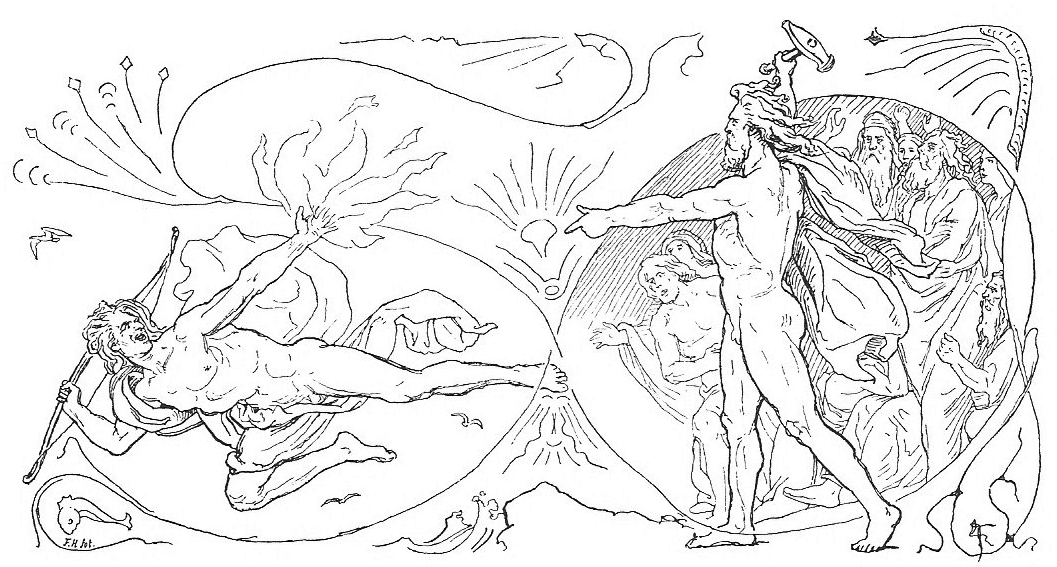
Including Locce as a trickster complicates the Anglo-Saxon religious worldview, acknowledging a divine source of chaos essential to mythic dynamism. His apparent marginalization could reflect Christian suppression but plausibly inspired tales explaining misfortune and disorder.
Conclusion
Reconstructing a fuller Anglo-Saxon pantheon in parallel with the Norse reveals a complex divine network that profoundly shaped early English culture and language. From Woden’s inspired madness to Þunor’s elemental might, from Bældæg’s light to Locce’s chaotic mischief, this pantheon would offer rich narratives about cosmic order, social values, and human experience.
Though surviving evidence is fragmentary, this reconstruction invites fresh linguistic and archaeological inquiry and reminds us of the spiritual richness that once permeated Anglo-Saxon England before the dominance of Christianity reshaped its mythic landscape. What do you think? Do you agree with this etymological reconstruction? Were these gods truly lost to time, or did the Anglo-Saxons maintain a smaller pantheon? Share your thoughts below
© 2026 Christian A. Larsen. All Rights Reserved.


Leave a Reply