

In the history of Middle-earth, few figures are judged more harshly than Sauron. By the end of the Third Age, he is remembered as the Dark Lord: a tyrant who sought dominion over all peoples through fear, war, and the power of the One Ring. To the Elves, the Dúnedain, and the Free Peoples who opposed him, his place in history appears obvious. He is the villain of the story.
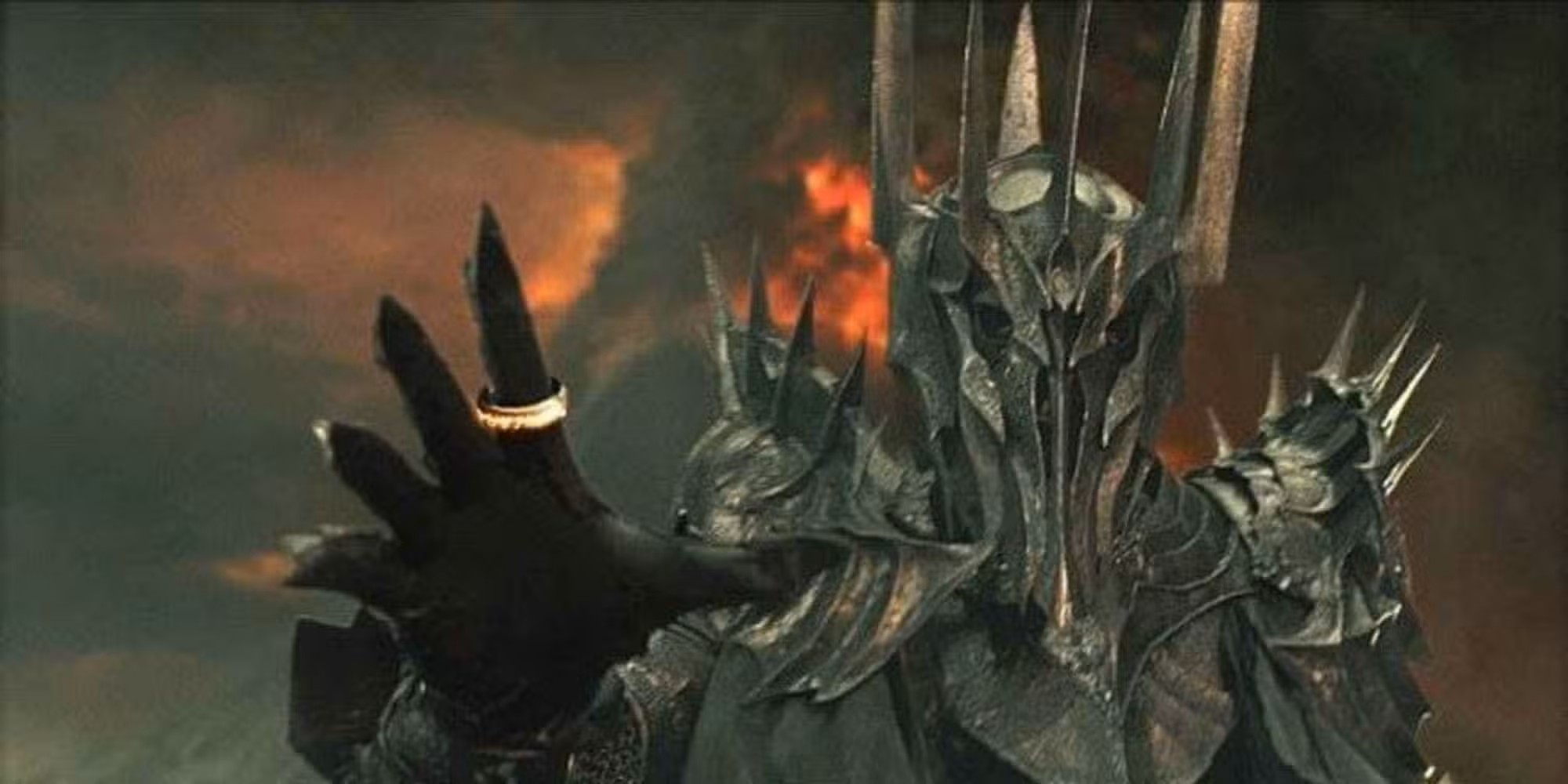
Yet Tolkien’s writings reveal a more complicated figure than a simple embodiment of evil. Unlike Morgoth, whose rebellion ultimately became destructive for its own sake, Sauron began as Mairon, “the Admirable,” a Maia devoted to craftsmanship, order, and perfection. Even after Morgoth’s defeat, Tolkien records that Sauron experienced genuine shame and repentance. This raises an intriguing question: how did Sauron understand his own actions during the Second Age?
The purpose of this essay is not to argue that Sauron was right. Tolkien himself ultimately condemns Sauron’s choices and presents them as a descent into tyranny. Rather, the goal is to reconstruct how Sauron may have justified his actions to himself. What did Annatar, the “Lord of Gifts,” believe he was doing? Why did he think the Elves were wrong to oppose him? And how might he have understood the war that followed?
Viewed through his own eyes, the story becomes less one of straightforward conquest and more one of competing visions for the future of Middle-earth.
How Annatar Understood His Mission
Before he became the Dark Lord, Sauron was known as Mairon, one of the Maiar who served Aulë the Smith. Tolkien describes him as one who “loved order and coordination, and disliked all confusion and wasteful friction.” These were not evil qualities. Indeed, within the service of Aulë they were admirable ones. Aulë’s domain was making, building, and bringing form and purpose to the material world. Sauron’s talents were perfectly suited to such work.
His corruption came through Morgoth. Yet even then, Tolkien distinguishes Sauron from his master. Morgoth desired domination because he ultimately desired possession of all things and destruction of anything he could not control. Sauron’s motives were different. He admired efficiency. He preferred planning over chaos. He sought control because he believed control produced better outcomes.
When Morgoth fell at the end of the First Age, Tolkien tells us that Sauron was ashamed and repented for a time. The Valar expected him to return to Aman, submit himself to judgment, and seek forgiveness. Instead, he remained in Middle-earth.
This refusal is often interpreted as simple cowardice, and there is certainly truth in that reading. Yet it is worth considering how Sauron may have understood the decision himself. Middle-earth had been devastated by centuries of war. Entire peoples had been exterminated or displaced. Great kingdoms had been reduced to ruins. Beleriand itself had disappeared beneath the sea. If Sauron accepted responsibility for helping Morgoth bring about that destruction, he may have concluded that presenting himself for punishment did little to repair the damage.
From his own perspective, rebuilding Middle-earth may have seemed a more meaningful form of repentance than returning to Aman.
This interpretation finds support in Tolkien’s observation that Sauron sought to “reorganise and rehabilitate the ruin of Middle-earth, ‘neglected by the gods.’” Those words are often read as the beginning of another power grab. Yet Sauron himself may have seen something different. The world had been broken. The Valar had withdrawn. Someone needed to restore what had been lost. Who better than one of Aulë’s greatest servants? Who better than someone who understood both the causes of the ruin and the means by which it might be repaired?
Seen from this perspective, Annatar’s appearance in Eregion was not necessarily the arrival of a conqueror. It was the arrival of a reformer.
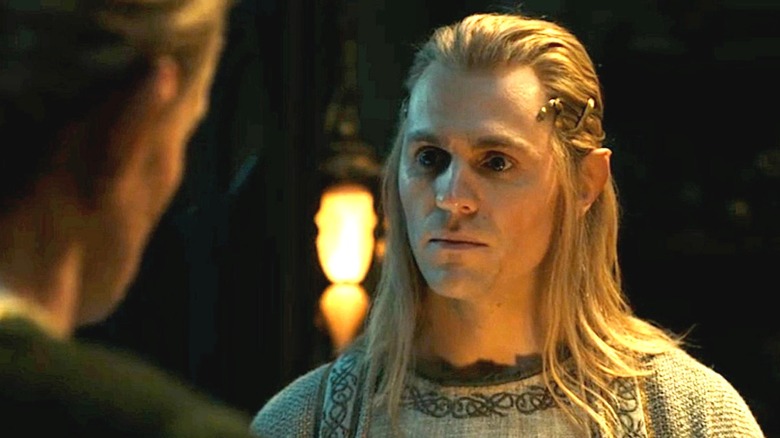
He did not come demanding tribute.
He came offering knowledge.
The Rings as Instruments of Order
The Rings of Power occupy a central place in the history of the Second Age, and they are usually understood as tools of domination. Certainly that is what they became. Yet it is worth asking how Sauron himself understood their purpose.
The Elves of Eregion were already engaged in a remarkable project. They sought to preserve beauty against decay and maintain the splendor of their realms in a changing world. Sauron shared in these ambitions. As a Maia trained by Aulë, he admired craftsmanship and understood the desire to create things of lasting value.
The Rings enhanced the abilities of their bearers. They preserved, strengthened, and enriched. The Three Rings, in particular, would later sustain some of the most beautiful realms in Middle-earth.
From Sauron’s perspective, the One Ring was not merely a weapon but the central element of a larger system. Tolkien’s later writings suggest that Sauron genuinely desired order and believed that order must be imposed for the good of the world. The One Ring therefore served as a means of coordinating powers that might otherwise remain fragmented and directionless.
To the Elves, this arrangement represented a threat. They recognized that the One Ring gave Sauron influence over the others and therefore rejected it.
To Sauron, however, the same arrangement may have seemed entirely reasonable.
A world recovering from catastrophe required coordination. Great powers acting independently could create instability and conflict. If the Rings were to shape the future of Middle-earth, should they not operate according to a coherent design rather than the whims of individual rulers?
The Elves saw domination.
Sauron saw administration.
Their disagreement was not merely about power. It was about authority and who possessed the right to exercise it.
The Problem of Melian
If we attempt to reconstruct Sauron’s own view of events, one comparison becomes difficult to avoid.
Why should Melian be celebrated for actions that, at least superficially, resembled his own?
Melian was also a Maia. She remained in Middle-earth and became one of the most influential figures in Elvish history. Through her marriage to Thingol, she exercised enormous influence over the kingdom of Doriath. She taught wisdom and lore beyond the knowledge of ordinary Elves. She protected an entire realm through the power of the Girdle of Melian. For centuries, Doriath flourished under her guidance and became one of the greatest kingdoms of the Elder Days.
From Sauron’s perspective, the similarities may have appeared striking:
- Both he and Melian were Maiar dwelling among the Children of Ilúvatar.
- Both shared knowledge unavailable to those around them.
- Both sought to improve and preserve the societies in which they lived.
- Both exercised authority rooted in wisdom and supernatural power.
- Both helped create realms of extraordinary beauty and achievement.
If the presence of a Maia guiding Elvish civilization was acceptable in Doriath, why should it be condemned in Eregion?
This comparison does not prove that Sauron was correct. It does, however, illuminate how he may have understood himself. To Annatar, his relationship with the Elves may not have appeared fundamentally different from Melian’s relationship with Thingol and Doriath. In both cases, a greater being offered guidance to lesser ones. In both cases, Middle-earth benefited from that guidance. In both cases, extraordinary achievements resulted.
The difference, as Sauron likely saw it, was not moral but political. The Elves accepted Melian because they trusted her. They rejected Annatar because they feared where his vision might lead.
Why Sauron Thought the Elves Were Wrong
The decisive break came when the Elves discovered the purpose of the One Ring.
Realizing that Sauron had forged a Ring through which he could influence the others, they removed and concealed their Rings. Rather than participate in the system Sauron had designed, they withdrew from it entirely.
To the Elves, this was an act of self-preservation.
To Sauron, it likely appeared as betrayal.
He had shared knowledge with the smiths of Eregion. He had contributed to the creation of the Rings. He had offered what he believed was a coherent vision for the future of Middle-earth. Then the Elves rejected that vision while retaining the fruits of his instruction.
From his perspective, they had accepted the gifts while refusing the obligations attached to them.
The Three Rings may have seemed particularly troubling. Unlike the others, they had been made without Sauron’s direct involvement. Yet they depended upon knowledge he had helped provide. The Elves retained these powerful instruments while rejecting the framework that gave them purpose.
To Sauron, this was not responsible stewardship.
It was dangerous independence.
If he genuinely believed that Middle-earth required centralized authority in order to heal and prosper, then recovering the Rings would have appeared not merely justified but necessary. The Elves were not defending freedom in his eyes. They were undermining the very system that could prevent the world from descending once again into disorder and conflict.
Seen in this light, the War of the Elves and Sauron was not, from his perspective, a war of conquest.
It was a war to restore a broken order.
Where Sauron’s Reasoning Fails
Yet Tolkien ultimately shows why Sauron’s vision could never succeed.
The flaw lay not in his desire for order itself. Order is not evil. Nor is craftsmanship, planning, or the wish to heal a damaged world.
The flaw was Sauron’s growing inability to distinguish between the good of Middle-earth and the success of his own plans.
This is where the comparison to Melian becomes particularly illuminating.
Melian possessed immense power, yet she did not require obedience. Throughout the history of Doriath, Thingol repeatedly ignores her counsel. She warns him of dangers. She advises caution. She sees consequences long before others do.
Yet she does not compel him.
She allows him to choose, even when she believes those choices are mistaken.
Sauron increasingly could not accept such independence.
To him, disagreement became obstruction. Resistance became irresponsibility. Freedom became inefficiency.
What began as a desire to coordinate gradually transformed into a desire to control.
The One Ring embodies this transformation. Rather than merely connecting the Rings into a harmonious whole, it placed them under Sauron’s authority. Rather than guiding others toward a common purpose, it subordinated their wills to his own.
At that point, the comparison to Melian breaks down.
Both sought to shape the world.
Only one ultimately required the world to submit.
The Tragedy of Annatar
What makes Sauron one of Tolkien’s most compelling villains is that his downfall emerges from qualities that were not originally evil.
He wanted order in a world scarred by chaos.
He wanted stability after centuries of war.
He wanted to rebuild what had been broken.
He may even have understood that work as a form of penance for his service to Morgoth.
Yet he gradually became convinced that only his vision could achieve those goals.
The tragedy of Annatar is not that he desired a better world. The tragedy is that he became unable to imagine a better world that was not organized according to his own will.
Looking through Sauron’s eyes helps us understand why he believed his actions were justified. He did not see himself as a destroyer. He saw himself as a protector, a teacher, and a builder. He believed he was offering Middle-earth the order it desperately needed.
Tolkien’s genius lies in allowing us to understand that perspective while simultaneously revealing its fatal flaw. Sauron sought to repair the wounds of the world, but he could only imagine doing so through increasing control over others. What began as guidance became authority. What began as authority became domination.
In the end, Sauron was not condemned because he wanted order.
He was condemned because he came to believe that every other will in Middle-earth should ultimately yield to his own.
© 2026 Christian A. Larsen. All Rights Reserved.


Leave a Reply