

Few creatures of European folklore are as immediately evocative—or as terrifying—as the troll. Towering, often grotesque, and sometimes cunning, trolls occupy the liminal spaces of mountains, forests, and deep wilderness. In Scandinavia, they were central to the folk imagination, embodying the forces of chaos, isolation, and raw natural power. Over centuries, these beings migrated into English folklore and ultimately into modern fantasy literature, evolving from primal giants of Norse myth into the multifaceted monsters and even sympathetic figures we know today.
Origins and Etymology
The English word troll comes directly from Old Norse troll, which referred broadly to giant or magical beings, often hostile to humans. The same word appears in Middle Low German and other Germanic languages, reflecting a widespread recognition of these formidable creatures.
The term ettin is a related concept, derived from Old English eoten, meaning “giant” or “monster.” The etymology traces even further back to Proto-Germanic etunaz, meaning “glutton” or “devourer,” which hints at early cultural associations with raw hunger, chaos, and danger. In Scandinavian myth, trolls were sometimes linked to the jötnar (giants) of Norse cosmology, though folklore distinguishes them in ways that emphasize localized, liminal, and morally ambivalent traits.
Interestingly, the linguistic lineage reflects a cultural blending of giant motifs: the same beings could be cosmic threats in mythic sagas or localized, forest-dwelling dangers in everyday folk imagination.
Trolls in Old Norse and Scandinavian Folklore
Trolls in Scandinavia are deeply tied to the landscape. Mountains, caves, forests, and remote valleys were said to harbor these beings, emphasizing their connection to wild and untamed nature. Unlike the moralized fairies or elves of folklore, trolls were ambivalent to human concerns: their motivations were neither fully evil nor ethical—they acted according to their own needs and instincts.
Physical and Magical Traits
Scandinavian trolls exhibit a remarkable variety in folklore:
- Size: From human-sized tricksters to colossal mountain giants, trolls’ size often correlates with the danger they pose. Ettins, specifically, are sometimes described as two-headed giants, emphasizing their monstrosity.
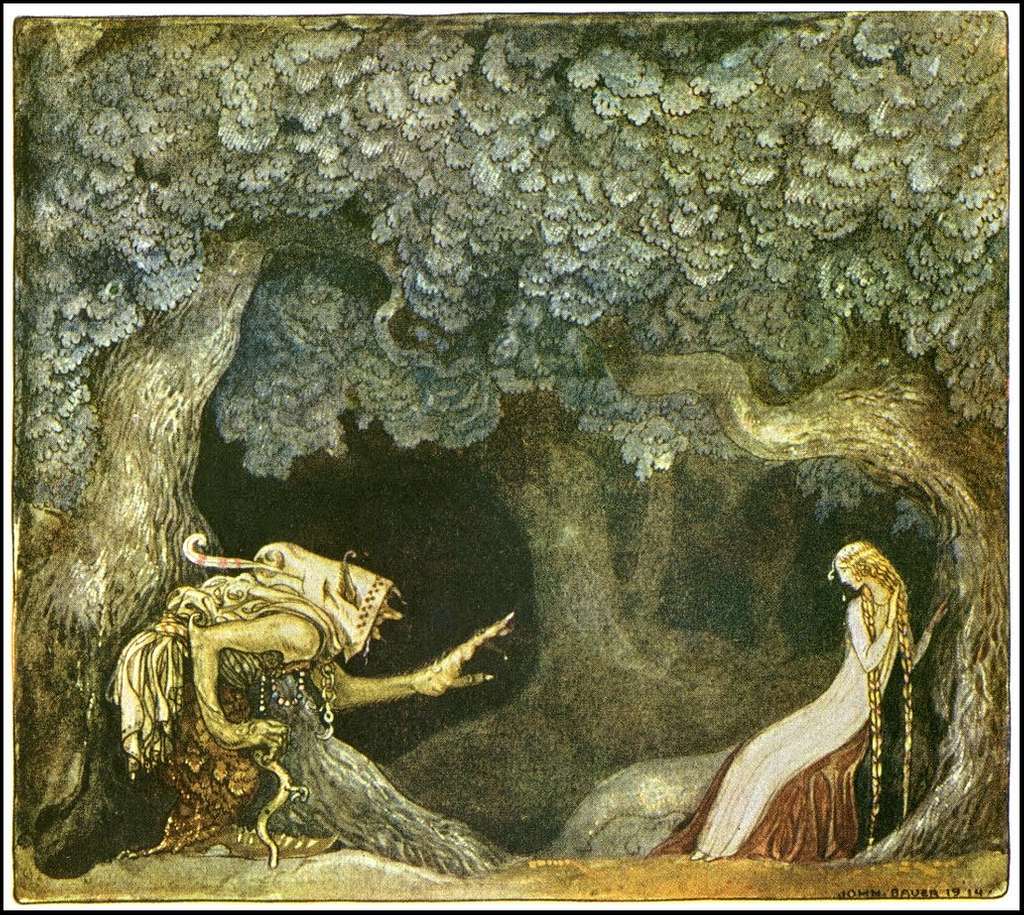
- Appearance: Folktales describe trolls as grotesque, with exaggerated facial features, wild hair, and sometimes animalistic traits. They were often depicted as hairy, smelly, and primitive, a reflection of human fear of the wild and untamed.
- Magic: Trolls possess supernatural strength and longevity. Some stories suggest they have shape-shifting abilities, often becoming stone or mist during daylight, which underscores the association with liminality and the natural cycles of day and night.
This last trait—turning to stone in sunlight—is particularly prominent in Norwegian and Icelandic folktales. It serves as a liminal boundary mechanism, connecting trolls to both the physical and symbolic landscape: they are creatures of the margins, active in shadowed and isolated spaces, but powerless in human-controlled or sunlit areas.
Roles and Behavior
Trolls occupy multiple roles in Scandinavian culture:
- Guardians of the wild: Some trolls are territorial, attacking intruders or punishing humans who disrespect natural or sacred spaces.
- Obstacles for heroes: Sagas frequently feature trolls as opponents for human protagonists, testing courage, ingenuity, and morality.
- Sources of wisdom or magical items: Rarely, trolls could be bargained with or outwitted to provide treasure, secret knowledge, or supernatural assistance.
This complex characterization shows that trolls were more than simple monsters: they embodied human anxieties about nature, isolation, and the unknown, while also acting as instruments for moral and practical storytelling.
Ettins: Trolls with a Twist
In English folklore, the term ettin is often synonymous with trolls, but it carries its own nuances:
- Derived from Old English eoten, ettins are typically giant, often cannibalistic humanoids.
- They are closely related to Norse jötnar but inhabit local folklore, particularly in northern England and the Scottish Highlands, regions influenced by Scandinavian settlement during the Viking Age.
- Folktales emphasize their dangerous cunning: ettins are not merely strong; they are often strategic, capable of ambushing travelers or hoarding treasure, a trait reflected in later fantasy interpretations.
The ettin concept allowed English folklore to translate Scandinavian giant motifs into local landscapes, maintaining the sense of peril while situating it in familiar territory.
Trolls in Folktales
Scandinavian folktales preserve some of the richest accounts of troll behavior:
- Trolls as obstacles: A frequent motif involves trolls threatening travelers, farmers, or livestock, with humans needing courage, wit, or magical objects to survive.
- Stone transformation: Many tales—especially in Norway—feature trolls turning to stone in sunlight, explaining natural rock formations like the famous “Trolltunga” (Troll’s Tongue) cliff.
- Interaction with humans: While often antagonistic, trolls could be outwitted, bribed, or avoided through cunning or ritual, reflecting the interplay of human cleverness and supernatural power.
These stories encode both practical lessons for survival in harsh landscapes and moral narratives about respect, cleverness, and the consequences of hubris.
From Scandinavia to English Folklore
The migration of troll motifs into England occurred during the Viking Age, when Norse settlers brought stories, terminology, and imagery with them. In northern England and Scotland:
- Trolls or ettins became associated with hills, caves, and ancient ruins.
- They appeared in oral storytelling traditions, sometimes conflated with ogres, giants, or local spirits.
- Local adaptations emphasized mischief and menace over the purely mythic or cosmic roles of Norse jötnar.
The English literary treatment of trolls was less codified than Scandinavian sagas, but the core attributes—strength, liminality, danger, and occasional cunning—persisted, seeding later literary developments.
Trolls in Modern Fantasy
The modern fantasy genre has inherited and transformed the troll archetype in several ways:
- Tolkien: Drawing on Old Norse sources, J.R.R. Tolkien’s trolls appear in The Hobbit and The Lord of the Rings as large, brutish, and strong, but often dim-witted, reflecting Scandinavian folklore while adapting it for narrative tension.
- Dungeons & Dragons: Trolls are regenerative, dangerous monsters, often depicted as forest-dwelling, reflecting the liminal, territorial aspects of Norse trolls.
- Fairy tales and children’s literature: Trolls retain the dual nature of menace and moral lesson, as in Norwegian fairy tales collected by Asbjørnsen and Moe, where trolls are cunning but ultimately fall victim to human cleverness.
Modern portrayals balance physical threat, magical traits, and moral ambiguity, echoing the Scandinavian púki or troll archetype: creatures of liminal, unpredictable power, shaped by landscape and narrative.
Cultural and Symbolic Significance
Trolls embody multiple symbolic dimensions:
- Nature’s raw power: They remind humans that mountains, forests, and rivers are not fully controllable.
- Liminality and moral testing: Trolls operate at the edges of human society and morality, offering tests of bravery, intelligence, and respect.
- Explaining the unknown: The folklore surrounding trolls provides mythic explanations for geological formations, dangerous places, and unusual events, reinforcing cultural narratives about nature and human behavior.
In Scandinavian myth, trolls are thus not just monsters—they are instruments of storytelling, cultural memory, and ethical reflection, blending fear, humor, and awe.
Physical Geography and Troll Myth
Scandinavian folklore frequently ties trolls to specific geological features:
- Norwegian mountains: Trolls were said to dwell in caves and behind cliffs, explaining natural formations.
- Icelandic lava fields: Some Icelandic sagas depict trolls turned to stone after exposure to sunlight, echoing geological phenomena.
- Swedish forests and lakes: Isolated wilderness areas became home to tales of trolls lurking, guarding treasures, or haunting travelers.
This geo-mythic integration demonstrates how folklore merges landscape, culture, and myth, embedding supernatural beings into the lived environment of Scandinavians.
Trolls vs. Ettins: Distinctions
While often conflated, the difference between trolls and ettins can be understood as:
| Feature | Troll (Scandinavian) | Ettin (English/Scots) |
| Origin | Old Norse troll, folk belief | Old English eoten, influenced by Norse |
| Size | Variable, often enormous | Large, often two-headed or monstrous |
| Behavior | Territorial, magical, morally ambivalent | Dangerous, often cannibalistic or greedy |
| Habitat | Mountains, forests, caves | Hills, ruins, wilderness |
| Magic | Shape-shifting, stone transformation | Strength, sometimes cunning |
The distinction emphasizes regional adaptation while preserving a common Germanic root in both language and myth.
Trolls in Modern Media and Culture
Today, trolls are ubiquitous in fantasy literature, gaming, and popular culture:
- Literature: From Tolkien to Scandinavian fantasy authors like Johan Egerkrans, trolls retain their folkloric traits.
- Games: In RPGs and MMORPGs, trolls are regenerative, dangerous creatures, reflecting Norse mythology’s emphasis on resilience and raw power.
- Film and TV: Trolls appear as both monstrous antagonists and comedic, whimsical figures, demonstrating the enduring flexibility of the archetype.
Modern reinterpretations, however, often strip away the deep integration with landscape and liminality found in traditional Scandinavian sources, turning trolls into more generic fantasy monsters. Yet the original folklore continues to inform these portrayals, consciously or not.
Conclusion: Trolls as Liminal Giants
From Scandinavian fjords to English hills, from oral sagas to Tolkien’s pages, trolls and ettins embody a mythic fascination with liminality, strength, and danger. They are creatures at the edge of society and perception, testing humans, inhabiting the wild, and reflecting the human need to personify the unknown.
In their Scandinavian origins, trolls are both monstrous and morally complex, sometimes fearsome, sometimes foolish, always bound to the natural world. As they traveled across Europe and into modern fantasy, these beings retained their core characteristics: ambiguous morality, territorial instincts, and the capacity to inspire awe and fear. Understanding trolls today requires a return to these roots: giants of mountain and forest, of stone and shadow, teaching lessons about the limits of human control and the enduring power of the wild.
© 2026 Christian A. Larsen. All Rights Reserved.


Leave a Reply