

In modern fantasy, elves are often imagined as ethereal, fair-skinned beings with pointed ears, living in enchanted forests and possessing great beauty, wisdom, and longevity. While this image owes much to Victorian romanticism and later fantasy authors, the Norse conception of elves (álfar) is far older, stranger, and deeply rooted in Scandinavian myth. In the Norse worldview, elves occupy a liminal space—between gods and humans, light and darkness, fertility and fate—serving as agents of magic, cosmic influence, and moral ambiguity.
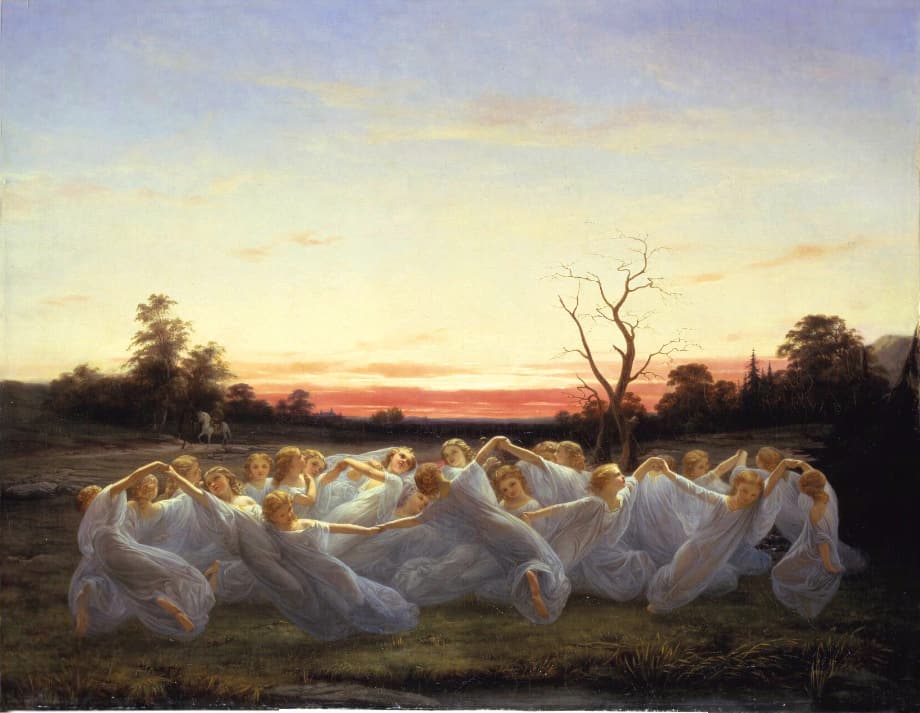
Origins and Etymology: Who Were the Elves?
The Old Norse word álfr (plural álfar) is cognate with Old English ælf, Old High German alb, and Gothic albs. Scholars trace it to the Proto-Germanic root *albiz, although the etymology before the Germanic stage remains debated. Some theories link it to light or shining beings, while others emphasize their magical, liminal qualities.
Elves in Norse myth are closely associated with fertility, health, and protection, but also with illness and misfortune. In Old English and Old Norse medical texts, elves are sometimes credited with causing disease, often referred to as elf-shot. This dual nature—beneficent yet potentially harmful—reflects the Norse worldview, in which powerful supernatural beings are rarely morally one-dimensional.
Elves in the Literary Sources
Elves appear in multiple Norse sources, including the Poetic Edda, Prose Edda, and various sagas. They are traditionally divided into two broad categories:
- Ljósálfar (“Light Elves”) – radiant beings associated with Álfheimr, a realm given to the god Freyr in the Prose Edda. They are generally considered benevolent, beautiful, and morally aligned with the forces of fertility and prosperity.
- Dökkálfar (“Dark Elves”) / Svartálfar (“Black Elves”) – often conflated with dwarves, these beings inhabit the underground realm of Svartálfaheimr and are associated with craft, cunning, and sometimes malevolence.
The distinction between light and dark elves is subtle and complex. Some scholars argue that the dark elves may have originally been dwarves, and the categories overlap in mythic texts. Names in Dvergatal, the catalogue of dwarves in Völuspá, often include “elf” (álfr) elements, such as Gandálfr (“wand-elf”), highlighting the blurred boundaries between these beings.
The overlap between elves and dwarves is especially evident in the figure of Völundr, the legendary smith celebrated in Völundarkviða (“The Lay of Völundr”). Described in the poem as “prince of the elves” (vísi álfa), Völundr possesses traits commonly associated with dwarves: unparalleled craftsmanship, secret knowledge, and a connection to the subterranean and magical world of forged treasures. His presence in the tradition suggests that the boundaries between elves and dwarves in Norse mythology were fluid rather than rigidly defined.
Álfheimr: The Realm of the Light Elves
In the Prose Edda’s Gylfaginning, Freyr is granted Álfheimr as a fief, suggesting that elves were tied to divine protection and the fertility of the land. The ljósálfar are described as fairer than the sun, living in a radiant, otherworldly realm. This connects elves to cosmic order, fertility, and blessings, contrasting with dwarves’ subterranean, secretive, and morally ambivalent nature.
Elves were sometimes invoked in rituals to ensure good harvests, fertility, and protection against disease. Burial mounds (haugar) were occasionally considered elf-abodes, further linking elves to the ancestral and sacred landscape. This underscores the Norse view of elves not simply as fantastical creatures, but as integral to the spiritual and natural order.
Dökkálfar and Svartálfar: Shadowy Kin
The dökkálfar or black elves are more mysterious and less clearly defined. In the Prose Edda, they share characteristics with dwarves: living underground, crafting magical items, and often exercising cunning or trickery. In some accounts, they are indistinguishable from dwarves, suggesting that these categories were fluid in medieval Scandinavian thought.
Figures such as Völundr reinforce this ambiguity. Though associated with elves, Völundr’s identity as a master smith aligns him closely with dwarf traditions. His myth also reveals the darker dimensions of supernatural beings in Norse cosmology: after suffering betrayal and imprisonment, he exacts a terrible revenge upon his captors. Like many beings of the Norse mythic world, Völundr is neither wholly heroic nor wholly monstrous, but morally complex and profoundly liminal.
This duality—light and dark—reflects a broader Norse cosmological principle: supernatural beings are multifaceted, embodying both creative and destructive powers. Just as dwarves can craft treasures or curses, elves can bless or harm humans depending on circumstance and ritual.
Elves in Poetry and Myth
Elves appear frequently in Norse poetry, though their mentions are often brief or cryptic. In Völuspá, elves are referenced indirectly, sometimes intertwined with dwarves in lists of mythic beings. The Poetic Edda contains occasional allusions to elves in the context of:
- Fertility and sexuality – Elves are linked to reproductive health, marriage blessings, and the fecundity of livestock and crops.
- Disease and misfortune – Particularly in Anglo-Saxon and Icelandic medical texts, elves were thought capable of causing illness through magical or spiritual means.
- Interaction with humans – Elves were considered capable of teaching magic or influencing human destiny, sometimes rewarded with offerings to ensure favor.
In saga literature, elves are less anthropomorphized than dwarves. They rarely take direct action in the human world, functioning instead as background powers that shape fate and fortune.
Elves and Other Supernatural Beings
Elves occupy a liminal position in Norse cosmology, overlapping with several other classes of beings:
- Dwarves – As mentioned, the dökkálfar or svartálfar are almost indistinguishable from dwarves in some accounts. Names with -álfr elements appear in dwarf catalogues (Dvergatal and Þul Dverga).
- Ásynjur (goddesses) – Light elves are often allied with fertility deities like Freyr, linking them to the divine management of the land.
- Landvættir (land spirits) – In Icelandic tradition, elves are sometimes conflated with or considered a type of land spirit, protecting specific landscapes or landmarks.
This intersection illustrates how Norse elves were not isolated characters but part of an integrated mythic ecology, influencing both gods and humans.
Names and Symbolism
Unlike dwarves, elves’ names are rarely individually catalogued in surviving texts. Some notable references include:
- Alfr and Yngvi – Appearing in Dvergatal, suggesting symbolic or ancestral roles.
- Gandálfr – Literally “wand-elf,” later appropriated by Tolkien as Gandalf, showing the continuity of mythic naming.
- Völundr – The legendary “prince of the elves,” whose role as a magical smith reveals the deep overlap between elves, dwarves, and heroic myth.
Elves’ symbolic associations are rich:
- Light and radiance – Signifying purity, cosmic order, and divine alignment.
- Fertility and life – Tied to the earth, crops, and human reproduction.
- Danger and ambiguity – Capable of disease, mischief, or leading humans astray if offended.
This duality underlines the Norse worldview: supernatural power is never purely benevolent or malevolent—it is contextual, situational, and morally nuanced.
Gender and Elves
Unlike dwarves, elves are often implicitly gendered as female or male, especially in fertility contexts. Female elves appear in folklore as beautiful, seductive, or protective figures. They sometimes intermarry with humans or gods in legend, emphasizing intermediary roles between the human and supernatural worlds.
Male elves, while less frequently mentioned, appear in names such as Gandálfr and in figures like Völundr, suggesting magical, aristocratic, or craft-related roles, though not as extensively developed as dwarves’ artisan mythology.
Elves and Cosmology
Elves are integrated into the Norse cosmic order in several ways:
- Álfheimr as a divine fiefdom underscores their connection to gods and sacred geography.
- Their duality (light/dark) mirrors broader Norse cosmological themes: balance, fate, and the interplay of visible and hidden forces.
- As supernatural influencers, elves interact with both humans and gods, shaping fate, health, and prosperity.
Unlike dwarves, elves are less tied to physical craftsmanship and more to spiritual, moral, and cosmic influence, embodying the subtle, invisible forces that sustain the Norse universe. Yet figures like Völundr demonstrate that these distinctions were never absolute; Norse myth frequently presents supernatural beings as overlapping categories rather than fixed species.
Elves in Modern Culture
Norse elves have profoundly influenced modern fantasy. Tolkien famously drew on the álfar, though he leaned toward the light, noble archetype. His elves are tall, wise, and magical, reflecting the ethereal qualities of ljóðálfar. Conversely, dwarves in Tolkien’s world capture the subterranean, craft-oriented, and morally ambivalent traits of svartálfar/dwarves.
Other authors, such as Terry Pratchett in Discworld and fantasy video games like The Elder Scrolls, have reimagined elves in multiple ways, sometimes light and angelic, sometimes shadowy and dangerous. These reinterpretations illustrate the flexibility and enduring resonance of the Norse elf archetype.
Conclusion: The Enduring Mystery of Norse Elves
Norse elves are not merely decorative figures in myth; they are dynamic, liminal beings, embodying light and shadow, creation and danger, fertility and fate. From the radiant ljóðálfar of Álfheimr to the shadowy dökkálfar lurking underground, elves represent the Norse understanding of the unseen forces shaping both human and divine realms.
Unlike dwarves, whose power is tangible and material—manifest in crafted treasures—elves exert subtle, pervasive influence. They are intertwined with land, fertility, health, and cosmic order, reminding us that in Norse cosmology, the invisible is as potent as the visible. Through their appearances in sagas, Eddic poetry, and þulur like Þul Dverga, elves remain central to Scandinavian myth. Their legacy extends into modern literature, where they continue to inspire imaginations, from Tolkien’s Middle-earth to contemporary fantasy worlds. Yet, the Norse conception preserves an essential tension: elves are beautiful, wise, and radiant, but also morally complex, mysterious, and sometimes dangerous—a reflection of the multifaceted world the Norse believed surrounds us, both seen and unseen.
© 2026 Christian A. Larsen. All Rights Reserved.
 Christian A. Larsen
Leave a comment