

At the end of the First Age of Middle-earth, the world was violently remade. The climactic War of Wrath shattered the northern fortress of Morgoth and brought about the destruction of most of Beleriand. Mountains collapsed, rivers changed course, and entire kingdoms were drowned beneath the sea.
Among the many realms caught in this catastrophe were the two great Dwarven cities of the Blue Mountains: Nogrod and Belegost. These ancient underground metropolises had stood for millennia and were among the most important centers of Dwarven civilization in the First Age.
Yet unlike many Elven and human cities of Beleriand, Nogrod and Belegost were not simply erased by the sea. They lay within the mountain chain known as the Blue Mountains, which survived the cataclysm.
So what became of them?
Tolkien’s texts provide only fragments of the answer. But by piecing together those fragments—and by comparing them with real-world historical examples—we can build a plausible picture of how these cities declined, why they were abandoned, and what happened to the royal houses that ruled them.
The Dwarven Realms of the Blue Mountains
Long before the rise of many other realms in Middle-earth, two of the Seven Houses of the Dwarves settled in the Blue Mountains. These were the Firebeards and the Broadbeams, two of the clans originally awakened by Aulë.

Together they established two great cities within the mountains:
- Nogrod
- Belegost
Tolkien clearly tells us that these two clans built and inhabited both cities. However, he never explicitly assigns one clan to one city in his surviving texts. Later summaries and fan traditions often associate the Firebeards with Nogrod and the Broadbeams with Belegost, but the primary sources do not definitively state this pairing.
What is certain is that the Blue Mountains became one of the major centers of Dwarven civilization during the First Age. The Dwarves of these cities were renowned for their craftsmanship and their wealth.
The legendary smith Telchar forged some of the most famous weapons of the age, including the sword that would later become Narsil. Meanwhile, the Dwarves of Belegost were famed warriors who fought bravely in the Nirnaeth Arnoediad, where their lord Azaghâl wounded the dragon Glaurung before falling in battle.
For centuries these cities prospered through mining, metalworking, and trade with nearby Elven kingdoms such as Doriath and Nargothrond.
But the end of the First Age would bring a disaster unlike anything they had faced before.
The Catastrophe That Reshaped the World
The War of Wrath was not merely a military conflict—it was a geological cataclysm. The armies of the Valar descended upon Middle-earth to defeat Morgoth, unleashing forces powerful enough to shatter continents.
By the war’s end:
- The fortress of Angband had been destroyed.
- The northern mountain ranges had been broken.
- Most of Beleriand had sunk beneath the sea.
Yet the Blue Mountains did not vanish. Instead, they were broken and reshaped, leaving them standing as the new western boundary of Middle-earth.
This survival explains why Nogrod and Belegost were not completely submerged. However, surviving the cataclysm did not mean the cities remained intact.
Underground Dwarven cities are extremely vulnerable to seismic upheaval. A massive earthquake can collapse tunnels, flood mines, or render entire districts inaccessible. Given the scale of the War of Wrath, it is highly likely that both cities suffered severe structural damage.
Even if their main halls remained standing, the surrounding infrastructure that sustained them may have been destroyed.
Why the Cities Were Likely Abandoned
The decline of Nogrod and Belegost after the War of Wrath fits a pattern seen many times in real-world history: cities abandoned not because they were completely destroyed, but because the conditions that supported them disappeared.
Several historical examples illustrate how this can happen.
Structural Damage and Instability
One of the most obvious consequences of the War of Wrath would have been widespread geological instability. Tunnels could collapse, mines could flood, and ventilation shafts could be blocked.
A historical parallel can be found in the medieval city of Ani. Once a thriving capital on the Silk Road, Ani declined after earthquakes damaged the city and regional trade routes shifted. The city itself still stands today in haunting ruins, but it was eventually abandoned.
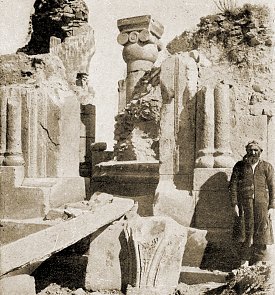
Nogrod and Belegost may have faced a similar fate: their physical structures remained, but the damage made them unsafe or impractical to inhabit.
Economic Collapse
Dwarven cities depended heavily on mining. Their prosperity came from extracting metals and gemstones from deep within the mountains.
If the War of Wrath collapsed or flooded key mining networks, the economic foundation of the cities would have been undermined. Without functioning mines, the vast urban infrastructure of a Dwarven metropolis would be difficult to sustain.
History provides many examples of mining towns that vanished after their resources became inaccessible.
Geographic Transformation
The sinking of Beleriand dramatically altered the geography of the region. One of the most important changes was the creation of the Gulf of Lune, where the sea cut into the land between the surviving portions of the Blue Mountains.
Cities that had once been located deep within a thriving continental region suddenly found themselves on the edge of a shattered coastline.
This type of environmental disruption has played a role in many historical abandonments. For instance, the ancient North American city of Cahokia declined in part due to environmental instability and flooding along the Mississippi River. The city itself was not submerged, but the surrounding ecological system that sustained it deteriorated.
Nogrod and Belegost may have experienced a similar shift as their surrounding lands disappeared beneath the sea.
Migration to Khazad-dûm
Perhaps the most decisive factor in the decline of the Blue Mountain cities was migration.
Shortly after the War of Wrath, many of the Dwarves of the Blue Mountains relocated eastward to the great Dwarven kingdom of Khazad-dûm, founded by the legendary Durin the Deathless.
Tolkien specifically notes that the Dwarves of Belegost strengthened Khazad-dûm in the early Second Age. If large numbers of inhabitants left the Blue Mountains, the remaining population may simply have been too small to maintain their vast cities.
Underground settlements require constant maintenance to remain safe and functional. Once a city’s population declines beyond a certain point, abandonment becomes almost inevitable.
What Happened to the Royal Houses?
Although the cities themselves declined, the Dwarven clans of the Blue Mountains did not disappear.
The Firebeards and Broadbeams continued to exist as two of the Seven Houses of the Dwarves. This fact is confirmed by later events in the Second Age.
During the Forging of the Rings of Power, seven rings were given to the leaders of the Dwarven houses by Sauron. Because there were seven houses, each clan—including those descended from the Blue Mountains—must have had a surviving royal line.
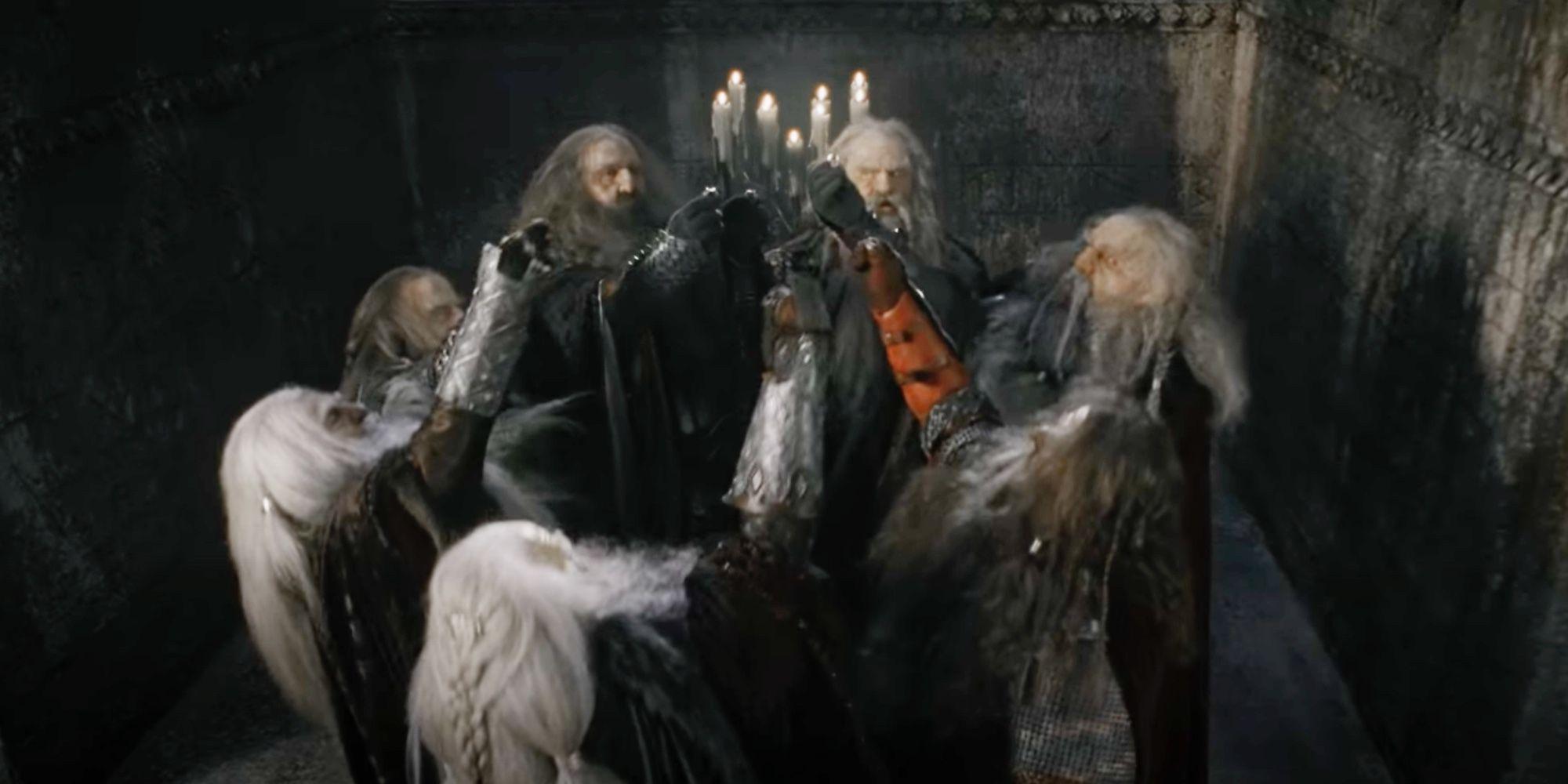
These royal houses likely relocated along with their folk.
Some probably settled in Khazad-dûm, where they may have become influential leaders within the broader Dwarven community dominated by Durin’s Longbeards. Others may have remained in the Blue Mountains, establishing smaller settlements in surviving halls.
Over time, these clans spread across Middle-earth, contributing to the populations of later Dwarven kingdoms.
The Blue Mountains in Later Ages
Although Nogrod and Belegost faded from prominence, the Blue Mountains were never entirely abandoned.
Dwarves continued to live there in later ages, often establishing new settlements rather than reoccupying the ancient capitals.
During the Third Age, the mountains became an important refuge for displaced Dwarves. After the dragon Smaug destroyed the kingdom of Erebor, the exiled prince Thorin Oakenshield established his halls in the Blue Mountains for a time.
This shows that the region remained habitable, even if its oldest cities had long since fallen silent.
Ghost Cities Beneath the Mountains
If Nogrod and Belegost were not completely destroyed, their ruins may still lie hidden beneath the Blue Mountains.
Collapsed tunnels might seal off entire districts. Ancient forges could remain buried beneath rockfalls. Flooded mines might extend deep into the roots of the mountains.
Such ruins would be similar to abandoned historical cities where buildings remain standing long after their inhabitants have departed.
The abandoned streets of Ani offer one example. The ruins of Cahokia offer another. These places were once centers of vibrant civilizations but now stand as silent reminders of worlds that have passed.
Nogrod and Belegost may represent the same phenomenon within the legendarium: ghost cities of the First Age, abandoned not because they were entirely destroyed, but because the world around them changed.
A Legacy That Outlived the Cities
Even though their capitals declined, the Dwarves of the Blue Mountains left a lasting legacy.
Their craftsmen created legendary works of metal and stone. Their warriors fought in the great battles of the First Age. Their descendants continued to shape the history of Middle-earth in the Second and Third Ages.
The royal houses of the Firebeards and Broadbeams survived long enough to receive Rings of Power and participate in the struggles against Sauron.
In this way, the fall of Nogrod and Belegost mirrors many episodes from real history: cities may disappear, but the cultures that built them endure. Deep within the broken Blue Mountains, the ancient halls of those cities may still lie buried in darkness—a hidden reminder of the lost world of Beleriand.
© 2026 Christian A. Larsen. All Rights Reserved.


Leave a Reply