

There’s a casual misconception about Watership Down: that it’s simply a gentle animal story, perhaps even a children’s book about rabbits in the vein of The Tale of Peter Rabbit by Beatrix Potter or Rabbit Hill by Robert Lawson. This assumption collapses almost immediately upon reading. What unfolds instead is something far more complex—a work that sits firmly within the tradition of fantasy literature, comparable in surprising ways to the epics of Tolkien or the morally intricate worlds of George R. R. Martin, while also incorporating deeply unsettling horror elements.
At first glance, the comparison might seem exaggerated. There are no dragons, no wizards, no sprawling maps filled with invented kingdoms. The story is set in the English countryside, a familiar and entirely real environment. Yet this surface realism is precisely what makes the novel so effective—and so deceptive. Beneath that grounded setting lies a fully realized secondary layer of culture, mythology, and existential tension that aligns it closely with the core principles of fantasy.
A Secondary World Without Leaving the Primary One
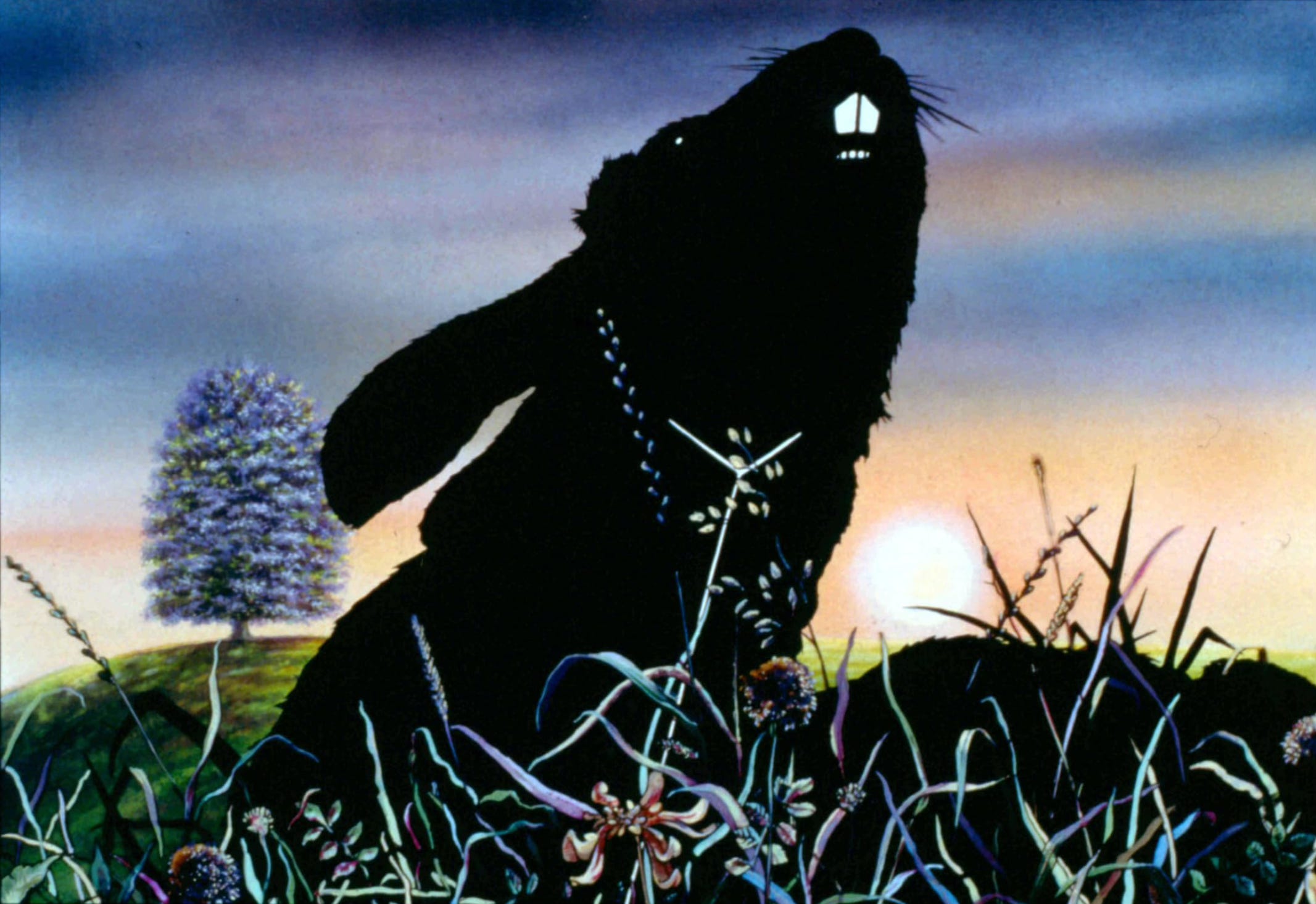
Traditional definitions of fantasy often emphasize the creation of a “secondary world”—a fully imagined realm distinct from our own. Tolkien famously articulated this idea as a hallmark of the genre. But Watership Down accomplishes something more subtle and, in some ways, more difficult: it constructs a secondary world within the primary one.
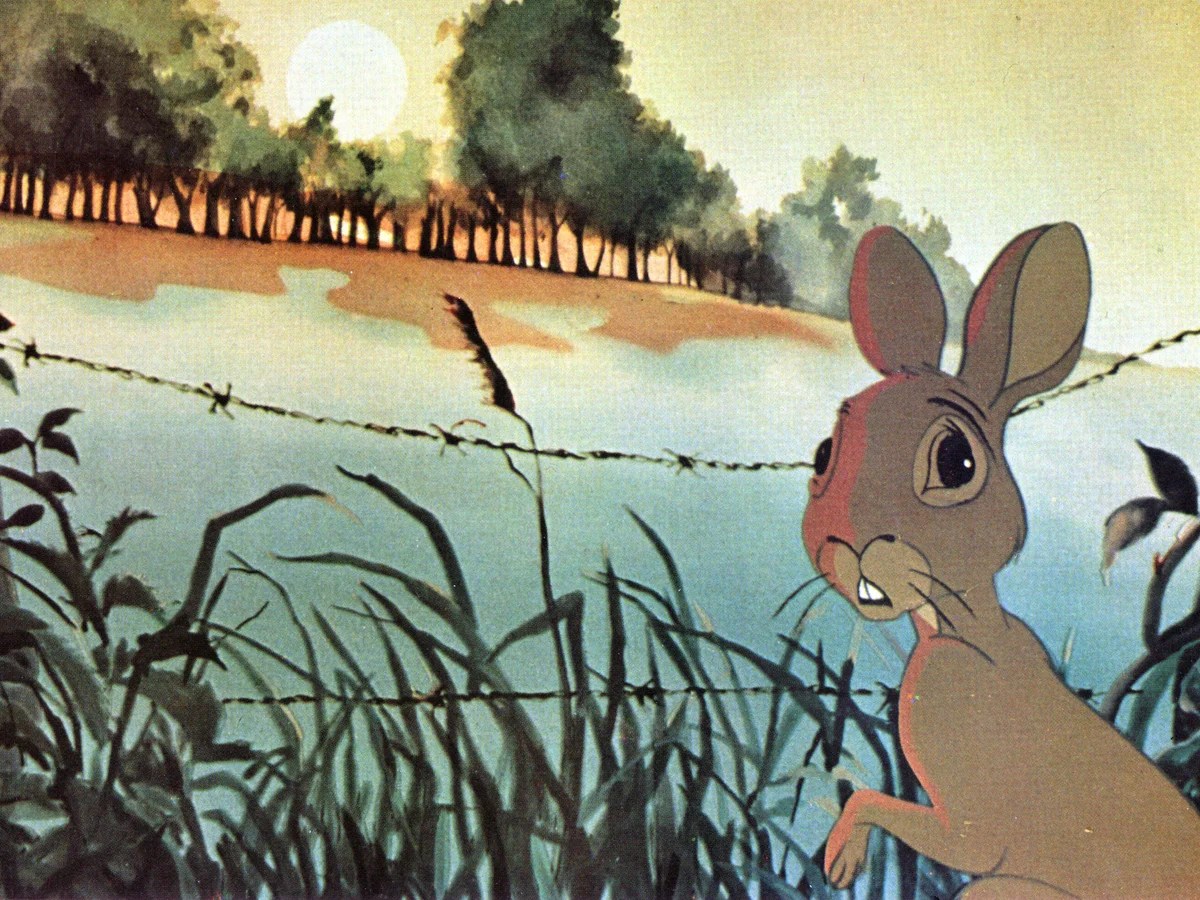
The fields, farms, roads, and hedgerows are all real. There is no portal, no magical boundary separating worlds. Instead, the transformation occurs through perspective. The rabbits experience the landscape as a place of immense scale and constant danger. A road becomes a roaring, incomprehensible force. A farmyard becomes a place of unnatural abundance tinged with hidden menace. A wire snare becomes a silent, invisible executioner.
This shift in perspective effectively creates a secondary world layered atop reality. The environment is the same, but its meaning is entirely different. The result is a kind of immersive realism that paradoxically deepens the fantasy rather than diminishing it.
Language, Myth, and Culture
What truly elevates the novel into the realm of fantasy is the richness of its internal culture. The rabbits are not merely animals with human-like thoughts; they possess a fully developed societal framework.
Their language—Lapine—is more than a stylistic flourish. It reflects how they conceptualize the world. Certain words capture ideas that have no direct human equivalent, reinforcing the sense that we are encountering a genuinely alien perspective. This is a technique strongly associated with high fantasy: language as a vehicle for worldbuilding.
Equally important is their mythology. The tales of El-ahrairah, the trickster hero, function as a kind of internal epic tradition. These stories are not incidental; they shape the rabbits’ worldview, inform their decisions, and provide a moral and philosophical framework. In this sense, the mythology operates much like the legends and histories embedded within larger fantasy sagas.
The presence of proverbs, storytelling traditions, and ritualized behaviors further reinforces the sense of a complete civilization. This is not a thin anthropomorphic overlay; it is a carefully constructed cultural system. The rabbits are believable not because they resemble humans, but because they are consistent within their own worldview.
The Epic Structure
Structurally, Watership Down aligns closely with epic fantasy. The narrative follows a classic quest pattern: a group leaves home due to impending catastrophe, journeys through dangerous territory, encounters allies and enemies, and ultimately establishes a new community.
This journey is not merely physical but moral and psychological. The characters must navigate questions of leadership, survival, loyalty, and freedom. These themes are central to many fantasy epics, where the external journey mirrors internal transformation.
The scale may be smaller—measured in fields rather than continents—but the stakes feel just as high. Survival is never guaranteed. Every decision carries weight. The tension is sustained not through spectacle, but through the constant presence of danger.
Moral Complexity and Political Themes
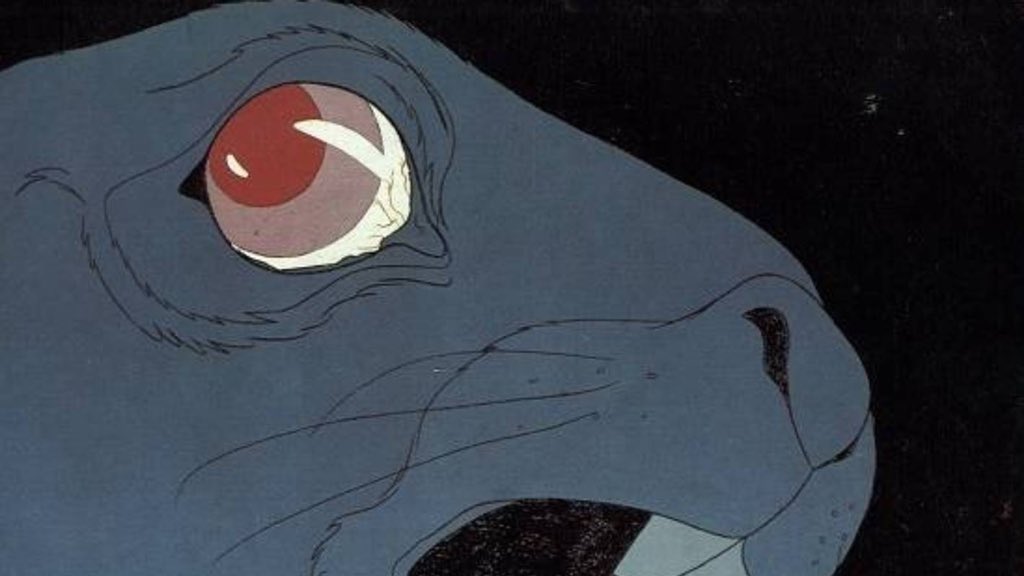
One of the most striking aspects of the novel is its exploration of power and governance. The warren of Efrafa stands as a chilling example of authoritarian control. Its rigid hierarchy, enforced conformity, and pervasive surveillance create a society defined by fear.
This is where comparisons to modern fantasy become especially apt. Like the political landscapes found in more contemporary works, the novel refuses to present a simplistic moral universe. Authority is not inherently just; survival strategies can become oppressive systems. Leaders are judged not only by their strength but by their capacity for empathy and adaptability.
The contrast between different warrens highlights competing philosophies of life. Some prioritize safety at the cost of freedom. Others embrace risk in pursuit of autonomy. These tensions echo broader themes found in epic fantasy, where the struggle for power often reveals deeper truths about human (or in this case, animal) nature.
The Presence of the Supernatural
Although the novel is grounded in realism, it contains unmistakable supernatural elements. These are not overt or flamboyant, but they are deeply embedded in the narrative.
Fiver’s visions are the most immediate example. His prophetic insights go beyond instinct or intuition; they carry the weight of genuine foresight. The accuracy and intensity of these visions suggest the presence of forces that operate beyond ordinary perception.
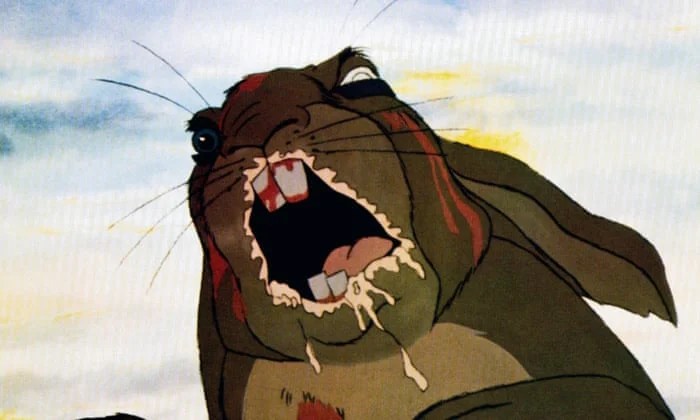
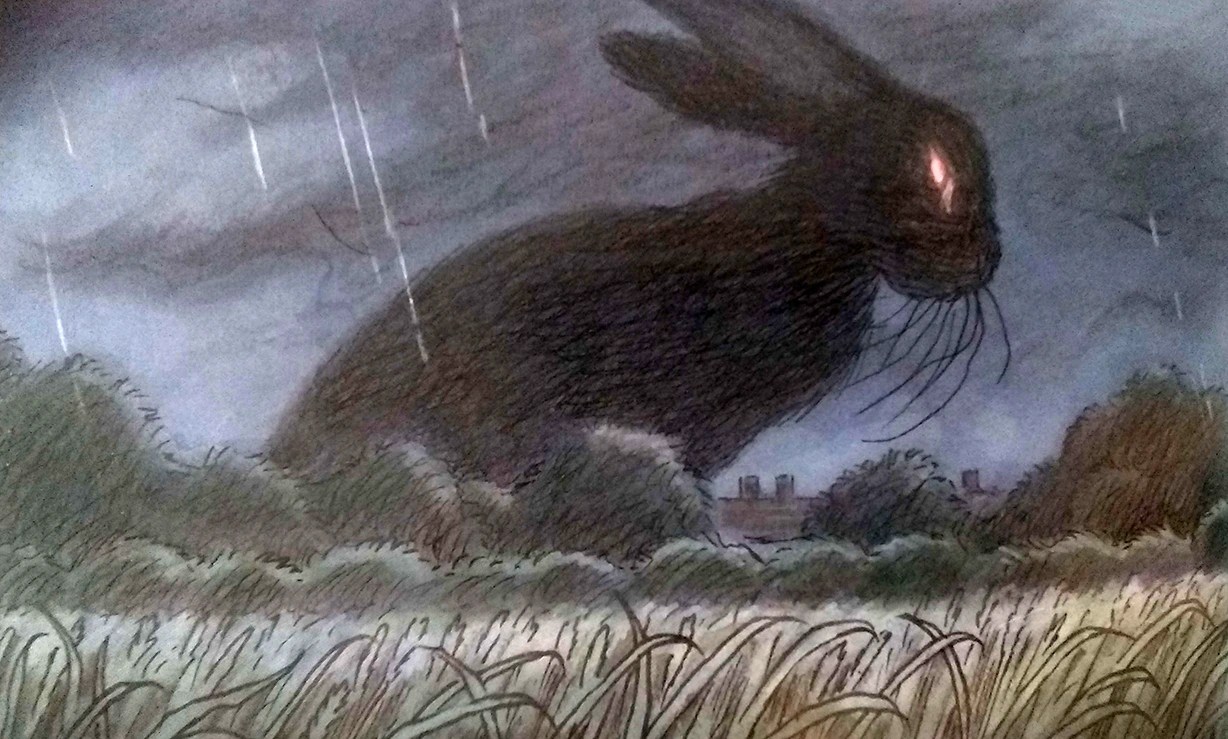
Then there is the mythology itself. Figures like El-ahrairah and the Black Rabbit of Inlé occupy an ambiguous space between story and reality. At times, they seem purely symbolic. At others, they feel undeniably real, as though the boundaries between myth and the physical world are permeable.
This ambiguity is key. The supernatural is never fully explained or systematized. It exists as a quiet undercurrent, shaping events without overtly dominating them. This approach lends the novel a mythic quality, aligning it with traditions of storytelling where the spiritual and the material coexist seamlessly.
Horror in the Ordinary
Perhaps the most unexpected dimension of Watership Down is its use of horror. Not horror in the sense of monsters or gore, but a more pervasive, existential kind.
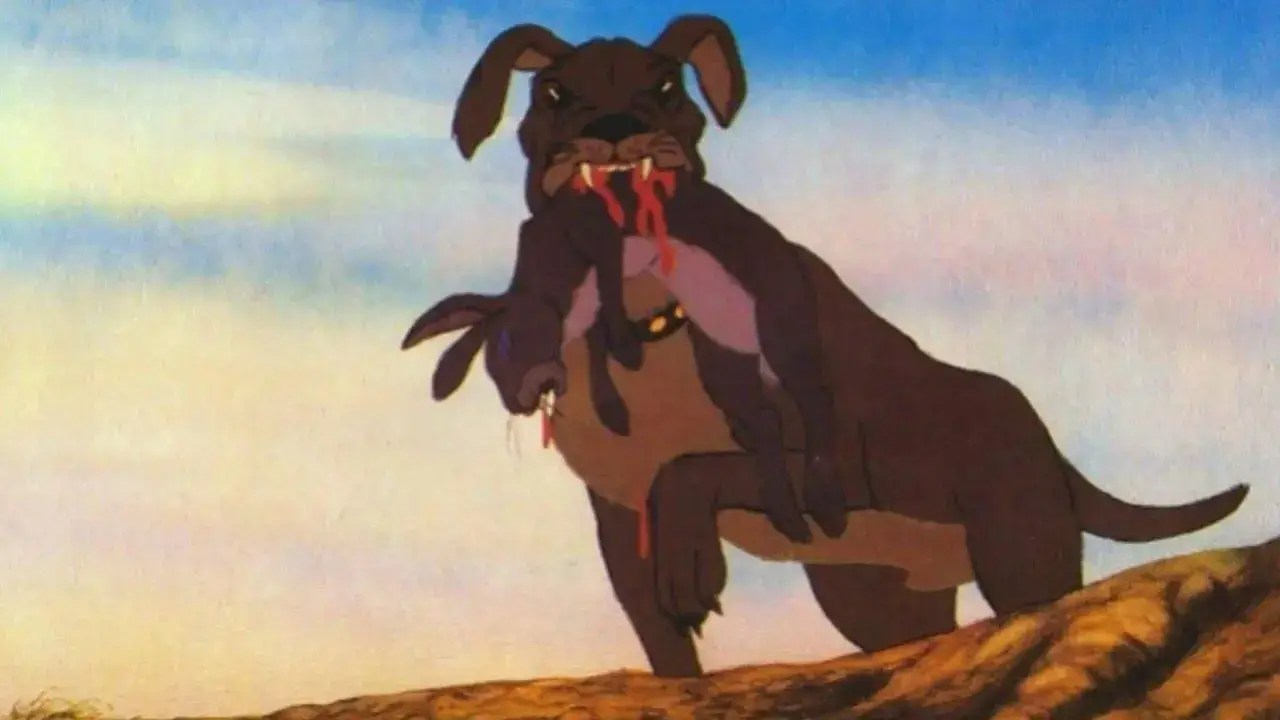
The brilliance of the novel lies in how it transforms the ordinary into the terrifying. Predators that readers might consider mundane—dogs, foxes, birds of prey—become overwhelming forces of destruction when viewed from the perspective of a rabbit. The disparity in size and power turns everyday encounters into life-or-death struggles.
Human artifacts are even more disturbing. A snare is not just a trap; it is an invisible menace that strikes without warning. A road is not just infrastructure; it is a chaotic, incomprehensible hazard. These elements introduce a sense of the uncanny—the familiar rendered alien and threatening.
The horror is intensified by the rabbits’ limited understanding. They cannot fully grasp the mechanisms behind these dangers. This lack of comprehension adds a layer of psychological fear. The world is not only dangerous; it is also fundamentally unknowable.
Existential Dread and Mortality
Beyond immediate threats, the novel grapples with deeper themes of mortality and fate. Death is a constant presence, not as an abstract concept but as an ever-looming reality.
The figure of the Black Rabbit of Inlé embodies this inevitability. Whether interpreted as a literal entity or a symbolic representation, it serves as a reminder that death is not an anomaly but an integral part of existence.
This awareness shapes the rabbits’ behavior and worldview. Courage is not the absence of fear, but the decision to act despite it. Survival is not guaranteed, and that uncertainty gives every moment a sense of urgency.
The result is a tone that oscillates between hope and dread. Moments of beauty and triumph are always shadowed by the possibility of loss. This balance is a hallmark of effective fantasy, where the stakes are high enough to make victory meaningful.
A Unique Position Within Fantasy
What makes Watership Down truly remarkable is how it synthesizes these elements into a cohesive whole. It is a fantasy novel without conventional trappings, an epic without grandiose settings, and a horror story without traditional monsters.
Its power lies in its restraint. By grounding the narrative in a recognizable world, it allows the fantastical elements to emerge organically. By focusing on small, vulnerable protagonists, it amplifies the intensity of every threat. By embedding mythology within the story, it creates a sense of depth that rivals more expansive works.
The comparisons to larger fantasy epics are not about scale, but about depth and function. Like the greatest works of the genre, Watership Down builds a believable world, explores complex themes, and engages with fundamental questions of existence.
Conclusion
To classify Watership Down as merely an animal story is to overlook its true nature. It is, at its core, a sophisticated work of fantasy—one that achieves its effects through subtlety rather than spectacle.
By constructing a rich cultural framework, employing mythic storytelling, and transforming the ordinary into the terrifying, it creates an experience that is both immersive and unsettling. Its horror elements arise naturally from its premise, reinforcing rather than undermining its fantasy foundation.
In the end, the novel stands as a testament to the versatility of the genre. Fantasy does not require distant worlds or overt magic. It requires imagination, coherence, and the ability to make readers see reality in a new way. On those terms, Watership Down is not just a fantasy novel—it is one of the most quietly powerful examples of the form.
© 2026 Christian A. Larsen. All Rights Reserved.
 Christian A. Larsen
Leave a comment