

C.S. Lewis’s The Lion, the Witch and the Wardrobe is often read through a modern or theological lens, but when we set aside those frameworks, the story begins to take on a different and much older shape. Beneath its surface lies a powerful mythic skeleton—one not tied to any single doctrine, but drawn from the collective sacred memory of ancient civilizations. Narnia is not a mere fantasy world; it is a mythic landscape shaped by the deep symbols of pagan religion—where gods die and return, nature is animated, and the struggle between chaos and order plays out across a metaphysical battlefield.
At the center of this mythic world stands Aslan, a lion who is not simply regal or wise, but divine in the most ancient sense. His death and resurrection place him squarely among the pantheon of sacrificial solar gods. Like Baldr in Norse mythology, Aslan is a radiant, beloved figure whose unjust death marks a cosmic turning point. In the Eddas, Baldr’s murder shatters the order of the gods and sets the stage for Ragnarök; his return afterward heralds the birth of a renewed world. So too, Aslan’s death at the Stone Table, brought about by treachery and dark magic, leads to the collapse of winter’s grip and the return of fertility and rightful kingship.
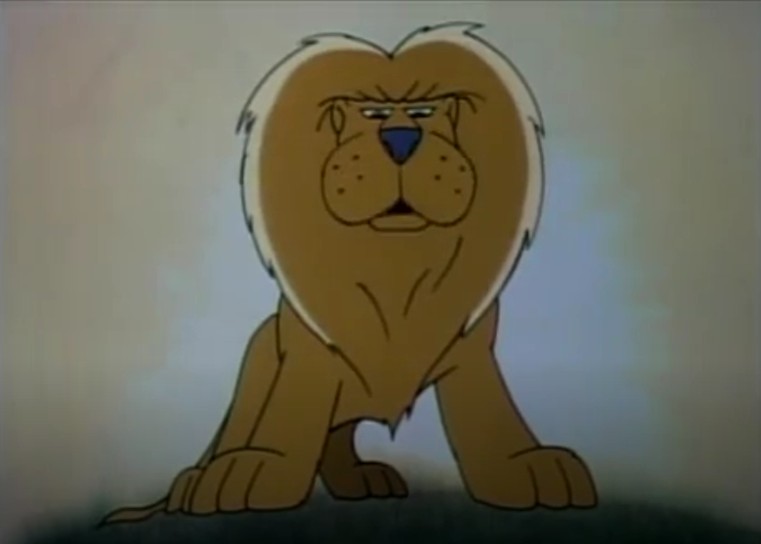
This same narrative appears again and again in the religions of the ancient Near East. In Egypt, the god Osiris is killed and dismembered by Set, cast into the underworld, and later restored by the love and magic of Isis. His resurrection ensures the continued fertility of the Nile and the prosperity of the kingdom. In Aslan’s case, his rebirth at dawn—immediately followed by the melting of snow and the blooming of flowers—is a perfect reenactment of this ancient cycle of death and renewal. In Babylonian cosmology, Marduk slays the chaos-dragon Tiamat to create the world. The echoes of that battle can be felt when Aslan returns to face the Witch’s forces in the climactic struggle that restores balance to Narnia.
Aslan also fits seamlessly into animistic and shamanic traditions, where animals are not lesser beings but divine manifestations. In Egyptian theology, gods take animal form with ease—Ra becomes a falcon, Sekhmet a lioness, Thoth an ibis. In this framework, Aslan is not simply a talking lion but a totemic embodiment of solar power, fertility, and judgment. His roar carries authority because it speaks with the voice of the world itself. He is lionhood made holy—a creature who embodies the spirit of rulership, the cycles of nature, and the divine right of kingship in a single form.
Opposite Aslan stands the White Witch, Jadis, whose dominion over Narnia is defined by lifelessness and cold. Her presence recalls a wide pantheon of underworld goddesses and chaos figures, particularly those who rule over the dead spaces of time and spirit. In Norse myth, Hel, the goddess of the underworld, reigns over a frozen, motionless realm. Her name has become synonymous with the grave, but her function is not to torment—it is to keep. Jadis mirrors this still, suffocating power, encasing Narnia in eternal winter, where no birth, growth, or movement can occur.
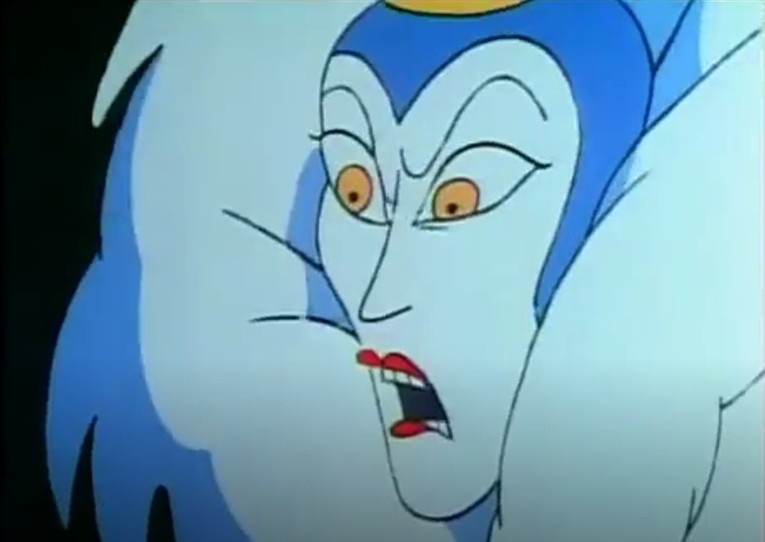
In Mesopotamian mythology, we find Ereshkigal, queen of the underworld, who traps the fertility goddess Inanna and forces her through a ritual of symbolic death. The Witch’s captivity of Edmund, and her ability to turn living beings into stone, feels like a direct echo of this mythic power. Her stone courtyard is a shrine to halted life, as potent and terrifying as any underworld. Her defeat by Aslan is more than a military victory—it is the rebalancing of cosmic forces, the return of movement to a frozen cosmos.
The land of Narnia itself is constructed like a mythic middle-world, similar to Midgard in Norse tradition or the terrestrial plane in Mesopotamian cosmology. In these systems, the world is divided into layers: the heavens, the earth, and the underworld. The earthly layer is where divine drama is enacted, and where mortals must make choices that echo through the structure of the cosmos. Narnia is such a place. It is a testing ground, a battleground, and a sacred space of revelation and transformation. The Stone Table functions much like the axis mundi—the spiritual and physical center of the world—where divine judgment, sacrifice, and rebirth converge.
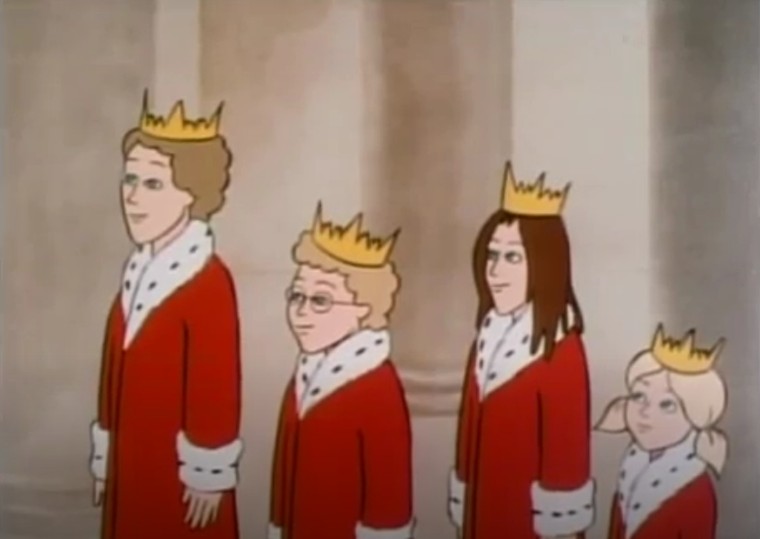
The Pevensie children, who begin the story as ordinary British siblings, are drawn into this mythic structure and transformed by it. Their journey is not simply personal growth; it’s a ritual passage into sacred kingship. This mirrors ancient concepts of rulership found across the ancient world. In Sumer, the king was not only the head of state but a priestly figure tasked with maintaining cosmic order (the me). In Egypt, the Pharaoh was an incarnate god. At Cair Paravel, the children take up thrones not to govern policy, but to embody divine harmony and uphold the world’s restoration.
In particular, Edmund’s arc is deeply initiatory. His betrayal and imprisonment under Jadis mirror the symbolic descent into the underworld seen in many ancient myths. Like Dumuzi, who is taken into the Sumerian underworld in place of Inanna, or like initiates in Mithraic and Eleusinian mystery cults, Edmund undergoes symbolic death and rebirth. He emerges from the Witch’s captivity changed—not merely forgiven, but transformed, worthy of rulership through suffering and insight.
All around them, Narnia teems with animistic spirit-beings—fauns, dryads, centaurs, talking animals—who are more than decorative fantasy. These beings recall the nature spirits of Greek, Roman, and pre-Indo-European tradition. They are the gods and guardians of forest, stream, and sky—numinous presences who respond to the health of the land and the presence of the divine. Their fear under the Witch’s reign and their joy at Aslan’s return are signs of a metaphysical shift—the land itself rejoices when the cosmic balance is restored.
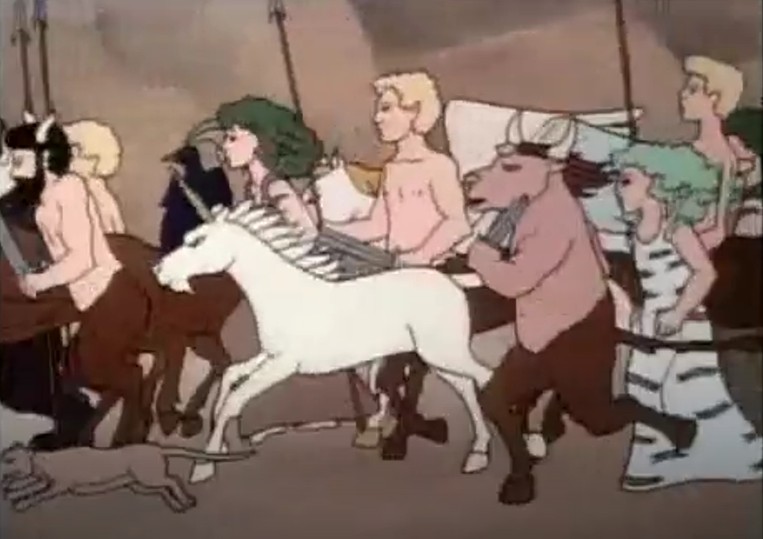
Finally, the battle that ends the Witch’s reign is not just the climax of a plot—it is a ritual reenactment of the cosmic war between order and chaos. We find this mythic pattern across the ancient world: Marduk slays Tiamat, Horus overcomes Set, Zeus defeats Typhon, Ra sails past Apophis each night. These stories encode a truth: the world must be regularly defended and restored through divine conflict. Aslan’s charge, the rising sun, the thawing earth—these aren’t symbolic flourishes. They are mythic events, as real in story as sunrise is in sky.
In this light, The Lion, the Witch and the Wardrobe is not a modern fable wearing old clothes. It is a true myth, one that lives and breathes with the spirits of ancient religion. Aslan is not a metaphor—he is lion, god, sun, and sacrifice, all in one. Jadis is not a villain—she is winter, death, stillness, the cold law of entropy itself. The children are not heroes—they are rites of kingship made flesh.
Narnia is not fantasy—it is remembrance. It recalls the sacred drama that has echoed through temples, tombs, and firesides since the beginning of story: the death and return of light, the renewal of the land, the fall of chaos, and the rise of order.
© 2026 Christian A. Larsen. All Rights Reserved.
 Christian A. Larsen
Leave a comment