

In the beginning, there was the Music.
In J.R.R. Tolkien’s The Silmarillion, the universe is sung into existence by the divine being Ilúvatar and his angelic Ainur. This harmonious creation—a symphonic act of beauty, balance, and order—is interrupted by Melkor, the most powerful of the Ainur, who introduces his own themes: dissonant, self-serving, and darkly seductive. Yet even this discord becomes woven into the greater music, enriching it with tension, drama, and depth.
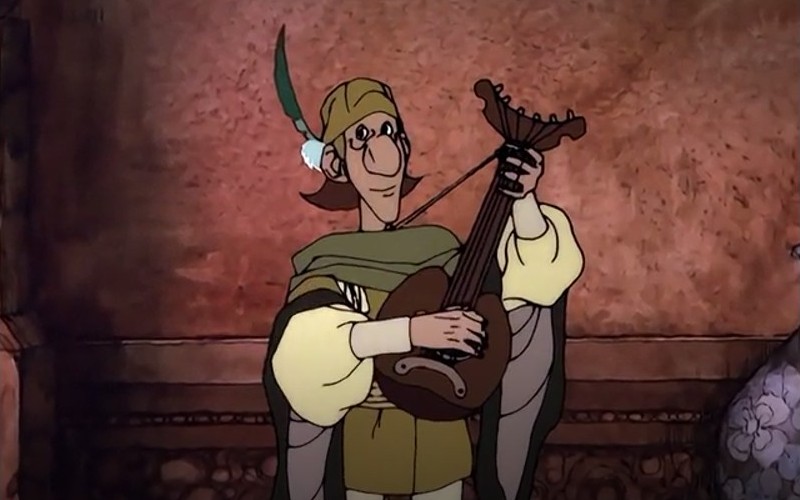
The same pattern unfolds in the evolution of 20th-century music.
In the early 1960s, AM radio ruled the airwaves, dominated by tidy, melodic, and often optimistic pop songs—the sonic equivalent of Ilúvatar’s original music. Think The Beatles’ early hits, Motown, and the clean-cut British Invasion. But as the decade progressed, something darker and more complex emerged: the “Discord of Melkor” in musical form—represented by FM radio, album-oriented rock, and the rise of progressive and hard rock.
And standing like a mythic bridge between those worlds was the writing of J.R.R. Tolkien.
The Pop-Harmony of Ilúvatar: Music Before the Rift
Before the rise of FM and the heavier genres, popular music was largely a singles-driven format. Songs were short, catchy, radio-friendly. The Beatles, The Beach Boys, and The Supremes created immaculate three-minute pop gems. This was Ilúvatar’s vision: melody in balance, structure in symmetry.
Though some early Beatles tracks like “The Fool on the Hill” or “Norwegian Wood” flirted with introspection and mysticism, they remained tethered to accessible pop forms. Tolkien’s legendarium—with its sprawling mythologies, invented languages, and moral ambiguity—had no obvious place in this sonic Eden.
But just as Melkor’s discord injected drama into the Ainulindalë, the late ‘60s brought musical divergence: longer songs, electric experimentation, lyrical complexity, and a move from the light into the mythic shadow. FM radio offered space for extended tracks and conceptual albums—a shift mirroring Melkor’s challenge to the dominant theme.
The Rise of Melkor’s Music: Album Rock and the Mythic Turn
Enter the Discord of Melkor—in the form of hard rock, psychedelic exploration, and progressive storytelling.
Among the first bands to fuse this new musical ambition with Tolkien’s mythos was Led Zeppelin. With tracks like “Ramble On” and “The Battle of Evermore”, Robert Plant channeled Middle-earth’s grandeur and danger into the DNA of hard rock. In “Ramble On,” we hear the narrator speak of Mordor, Gollum, and the Evil One—a fantasy realm now entwined with the blues-rock tradition. The song itself is a sonic journey, a blend of acoustic lightness and electric urgency—much like the journey from the Shire into the heart of darkness.
“The Battle of Evermore” digs deeper into Tolkien’s mythopoetic mode. With direct nods to Ringwraiths and archetypes like the “Queen of Light,” the track creates a battlefield between light and shadow—musically soft but thematically heavy. It’s the perfect embodiment of Melkor’s discord: a mournful war song laced with doom and transcendence.
Rush, the Canadian power trio steeped in both sci-fi and high fantasy, followed a similar arc. “Rivendell”, from their 1975 album Fly by Night, is a peaceful acoustic meditation on the Elven sanctuary. But by the time of “The Necromancer” later that year, the band was descending into darker territory—drawing on Sauron’s guise as the Necromancer from The Hobbit to construct a narrative of oppression, conflict, and mythic heroism.
Black Sabbath—often considered the first true heavy metal band—also contributed to this dark transformation. Their song “The Wizard”, while not name-dropping Gandalf directly, was inspired by him. The figure at its center is a cloaked wanderer, a magical being of unknown power. Sabbath’s music—downtuned, ominous, and apocalyptic—became a natural channel for Tolkien’s darker archetypes: fallen kings, cursed rings, and looming evil.
Even Jack Bruce, venturing out from Cream in 1969, named a solo track “To Isengard”, directly referencing Saruman’s corrupted stronghold. Though abstract in lyric, the title points to Tolkien’s influence seeping into the rock world just as album rock was emerging from the AM chrysalis.
Progressive Rock and the Expansion of the Musical Cosmos
If Led Zeppelin and Sabbath brought Tolkien into the thunder and shadows of hard rock, progressive rock invited him into the labyrinths of symphonic composition and storytelling.
Camel, on their 1974 album Mirage, recorded “Nimrodel / The White Rider”, a three-part suite depicting Gandalf’s transformation and return. The track mirrors Tolkien’s narrative arc in musical form—beginning with somber flutes and building to triumphant fanfares. Lyrics speak of “Lothlórien” and “the King of Light,” embedding Tolkien’s legendarium within the proggy textures of Mellotron and guitar.
In Sweden, Bo Hansson released the landmark Music Inspired by Lord of the Rings (1970)—an entirely instrumental album that attempts to sonically trace the Fellowship’s journey. With titles like “Leaving Shire” and “The Ring Goes South,” the album avoids lyrics but captures Tolkien’s emotional palette: from the pastoral calm of the Shire to the bleak urgency of Mordor. It was an FM-era experiment—not marketable in the traditional AM sense, but cultishly beloved and deeply immersive.
Cirith Ungol and the Birth of Mythic Metal
As FM radio gave way to underground scenes and heavier genres in the late ‘70s, Tolkien’s influence deepened.
Cirith Ungol, named after the perilous pass watched over by Shelob in The Lord of the Rings, formed in California in the early ‘70s. Their music—though more prominent in the ‘80s—carried the DNA of Tolkien’s gothic horror and moral decay. With distorted riffs and apocalyptic lyrics, they exemplified a growing lineage of artists aligning themselves with Melkor’s dark inheritance—or at least its atmosphere.
Though not explicitly Tolkienian in every track, bands like Cirith Ungol would open the floodgates for power metal and black metal acts in the decades to come, many of whom would base entire albums (and even discographies) on Tolkien’s texts.
None more so than Summoning, the Austrian black metal duo who emerged in the 1990s but drew heavily from the melancholy, tragedy, and faded grandeur of Tolkien’s First and Second Ages. Their music can be seen as the full flowering of the “Discord of Melkor”—droning, atmospheric, and steeped in The Silmarillion’s deepest shadows.
Myth, Music, and Melkor’s Legacy
What made Tolkien’s work so potent for musicians in the ‘60s and ‘70s—particularly those moving into harder, darker, or more expansive territory—was its mythic scale and moral complexity. Unlike the tidy resolutions of AM radio love songs, The Lord of the Rings and The Silmarillion offer a vision of a world constantly teetering between ruin and redemption.
And in the metaphor of Melkor’s Discord—that disruptive, selfish music that nevertheless becomes part of a greater whole—we find an elegant parallel to what happened in rock music itself.
What was once simple and harmonious—early pop, short singles, major-key melodies—was interrupted by the dark grandeur of album rock: longer songs, heavier riffs, fantasy lyrics, and dystopian themes. Yet rather than destroy the beauty of the original music, this new discord made it more profound. It expanded rock’s narrative capacity. It made space for Tolkien.
Conclusion: When Middle-earth Found the Airwaves
Tolkien’s influence on 1960s and 1970s rock wasn’t a coincidence of timing—it was a natural collision. As musicians grew restless with the simple formulas of AM radio, they turned to the kind of high-stakes, morally charged mythologies that Tolkien had mastered. The shift from pop harmony to rock’s darker currents was, in a way, a reenactment of the Ainulindalë—the Music of the Ainur.
And like Ilúvatar, perhaps Tolkien would have seen the value in even the darkest riffs—knowing that from the Discord of Melkor came the depth, drama, and mythic scale that made the music of that era truly legendary.
© 2026 Christian A. Larsen. All Rights Reserved.
 Christian A. Larsen
Leave a comment